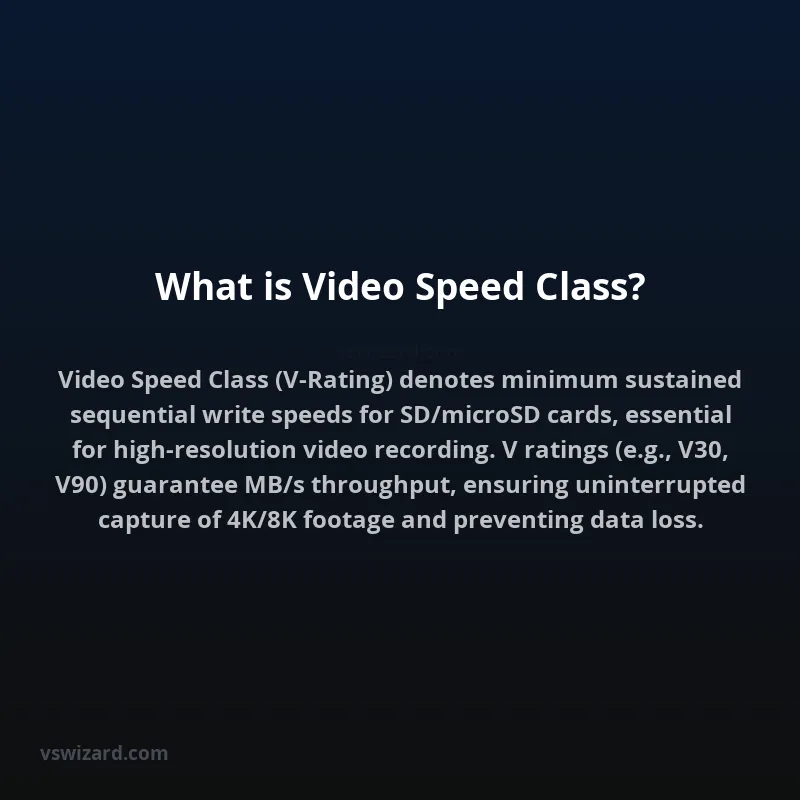
Video Speed Class, denoted by the "V" designation followed by a numerical identifier (e.g., V10, V30, V60, V90), is a standardized performance metric for SD (Secure Digital) and microSD memory cards. It specifies a minimum sustained sequential write speed, crucial for recording high-resolution video formats. This classification system was introduced by the SD Association to ensure interoperability and provide consumers with a clear indication of a card's capability to handle the data throughput demands of modern video capture devices, such as 4K and 8K camcorders, drones, and high-end smartphones. The numerical value directly correlates to the minimum sustained write speed in megabytes per second (MB/s); for instance, a V30 card guarantees a minimum sustained write speed of 30 MB/s.
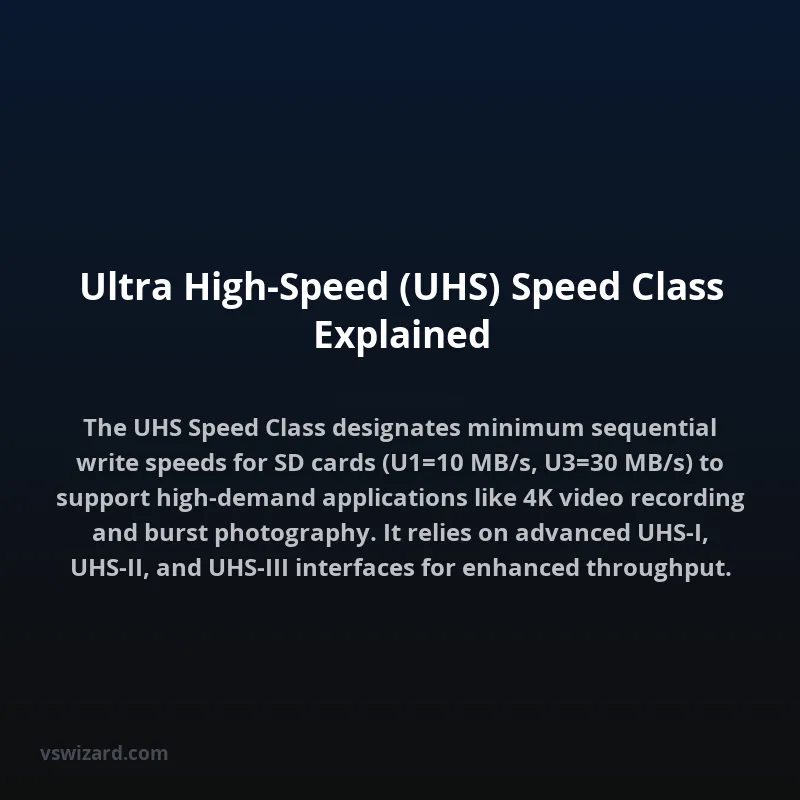
The establishment of Video Speed Classes addresses a critical need stemming from the increasing data rates generated by advanced video codecs and higher frame rates. Prior speed-class systems, such as UHS Speed Classes (U1, U3), primarily focused on peak performance or were less explicitly tied to sustained write performance required for continuous video recording. Video Speed Classes provide a more granular and reliable benchmark for applications where consistent, high-speed data transfer is paramount to avoid frame drops, recording interruptions, or data corruption. This standardization facilitates more informed purchasing decisions for professionals and enthusiasts engaged in demanding multimedia content creation, ensuring that the memory card can function as a bottleneck-free ingest device for intensive video workflows.
Mechanism and Standards
Video Speed Class ratings are determined through standardized testing protocols established by the SD Association. These tests rigorously measure the minimum sustained sequential write performance of a memory card over its capacity. The requirement is not for peak theoretical speeds, which can be transient and unrepresentative of real-world continuous recording, but for a guaranteed minimum speed that the card can maintain throughout the writing process. This is particularly vital for video recording, where a consistent data flow is essential to prevent buffer underruns on the recording device.
The standards define specific minimum sustained write speeds for each class:
- V6: 6 MB/s
- V10: 10 MB/s
- V20: 20 MB/s
- V30: 30 MB/s
- V60: 60 MB/s
- V90: 90 MB/s
These classes are designed to align with the requirements of various video recording formats. For example, V10 is generally sufficient for Full HD (1080p) recording, while V30 is a common minimum recommendation for 4K UHD video. V60 and V90 are engineered for higher frame rates, higher bitrates, and more complex codecs, such as those used in professional cinema cameras and high-end DSLRs/mirrorless cameras for 4K 60fps or 8K video recording.
Industry Adoption and Applications
The adoption of Video Speed Classes by memory card manufacturers provides a unified language for specifying performance capabilities relevant to video recording. This benefits consumers by simplifying the selection process and reducing ambiguity compared to older, less specific speed metrics. Key applications include:
- Camcorders and Cinema Cameras: Essential for professional video production, ensuring smooth capture of high-bitrate 4K, 6K, and 8K footage.
- DSLRs and Mirrorless Cameras: Enables the full video recording capabilities of modern digital cameras, including high frame rates and advanced codecs.
- Drones: Crucial for capturing high-resolution aerial video footage without interruption.
- Action Cameras: Supports the demanding continuous recording of high-resolution, high-frame-rate video in dynamic environments.
- Smartphones: While often utilizing internal storage, external microSD cards with appropriate Video Speed Class ratings can expand recording capabilities for high-resolution video.
Performance Metrics and Testing
Measuring Video Speed Class performance involves specialized equipment capable of simulating continuous write operations and accurately measuring the sustained throughput. The process typically involves writing large files to the card and monitoring the write speed to ensure it does not drop below the specified threshold for the duration of the test. This contrasts with peak speed ratings, which might only represent the initial burst speed achievable under ideal conditions.
The distinction between sequential and random read/write speeds is also important. Video Speed Classes specifically address sequential write speeds, as video recording involves writing continuous streams of data. Random write performance, measured in IOPS (Input/Output Operations Per Second), is more relevant for tasks like loading operating systems or running applications, but less critical for the continuous stream capture characteristic of video recording.
| Video Speed Class | Minimum Sustained Write Speed (MB/s) | Typical Application |
|---|---|---|
| V6 | 6 MB/s | Full HD (1080p) recording |
| V10 | 10 MB/s | Full HD (1080p) recording at higher bitrates |
| V30 | 30 MB/s | 4K UHD recording, High Frame Rate (HFR) Full HD |
| V60 | 60 MB/s | High-bitrate 4K UHD, 8K recording at lower frame rates |
| V90 | 90 MB/s | High-bitrate 8K recording, professional video formats |
Advantages and Limitations
Advantages
- Reliable Sustained Performance: Guarantees minimum write speeds necessary for uninterrupted video recording.
- Clear Standardization: Simplifies consumer choice and ensures compatibility across devices.
- Future-Proofing: Classifications like V60 and V90 cater to the evolving demands of high-resolution and high-bitrate video.
- Interoperability: Promotes compatibility between memory cards and recording devices designed to leverage these speed classes.
Limitations
- Focus on Sequential Write: Does not directly address random I/O performance, which can impact other non-video related operations.
- Minimum Guarantee: Actual sustained speeds may exceed the minimum requirement, but the class only guarantees the specified floor.
- Device Compatibility: The full benefit of a high Video Speed Class card is only realized when used with devices that support and require such speeds.
Evolution and Future Outlook
The introduction of Video Speed Classes represents an evolutionary step in memory card standardization, directly addressing the performance requirements of digital video. As video resolutions increase (e.g., beyond 8K), frame rates climb, and compression techniques evolve, the demand for higher sustained write speeds will continue to grow. Future iterations of these standards may introduce higher class designations to accommodate these advancements. The ongoing development of flash memory technology and interface standards (like PCIe in NVMe SSDs, although not directly applicable to SD cards) suggests a trajectory towards even greater throughput capabilities in portable storage media.
The technical value of Video Speed Class lies in its ability to assure a specific level of performance critical for data-intensive, real-time operations like video capture. This prevents performance bottlenecks at the storage medium, which is essential for maintaining the integrity and quality of recorded media. The continued refinement of these classifications will be integral to supporting the ever-increasing demands of digital content creation and high-fidelity media capture across a wide spectrum of consumer and professional devices.