Upload speed denotes the rate at which digital data is transferred from a local device, such as a computer or mobile phone, to a remote network or server. This metric is typically quantified in bits per second (bps), kilobits per second (Kbps), megabits per second (Mbps), or gigabits per second (Gbps). In the context of internet service provision, particularly fiber-optic networks like Gigabit Passive Optical Network (GPON), upload speed is a critical performance parameter, often contrasted with download speed, which signifies the rate of data transfer from the remote network to the local device. The asymmetry in typical broadband connections, where download speeds are significantly higher than upload speeds, is a design choice influenced by historical usage patterns and service provider infrastructure priorities. However, the increasing prevalence of cloud-based applications, video conferencing, real-time collaboration tools, and content creation necessitates a greater emphasis on symmetric or near-symmetric upload capabilities.
The physical and protocol layers governing upload speed are complex, involving modulation techniques, channel coding, multiplexing, and error correction mechanisms. In wired networks, factors such as cable quality, signal-to-noise ratio (SNR), interference, network congestion, and the processing capabilities of network interface controllers (NICs) and routing hardware directly influence the achievable upload throughput. For wireless technologies, radio frequency propagation, spectrum availability, interference from other devices, and the distance to the access point are paramount. In the specific domain of GPON, upload functionality is managed through the time-division multiplexing access (TDMA) scheme, where each Optical Network Unit (ONU) is allocated specific time slots by the Optical Line Terminal (OLT) to transmit data upstream. The OLT aggregates these transmissions, and the efficiency of this scheduling algorithm directly impacts the effective upstream bandwidth available to end-users.
Mechanism of Action and Underlying Technologies
The transmission of data upstream involves converting digital bits into analog signals suitable for propagation over a physical medium. This process begins at the application layer and progresses down through the network stack. At the transport layer, protocols like TCP (Transmission Control Protocol) manage the segmentation of data into packets and handle acknowledgments to ensure reliable delivery. UDP (User Datagram Protocol) is used for applications where speed is prioritized over absolute reliability, such as real-time streaming. At the network layer, IP (Internet Protocol) addresses and routes these packets. The data link layer frames these packets for transmission over the specific physical medium, employing error detection mechanisms.
Wired Transmission Media
For wired connections, such as Ethernet or fiber optics, upload speed is constrained by the physical properties of the cabling and the encoding schemes employed. Twisted-pair copper cables (e.g., Cat5e, Cat6) use electrical signaling, susceptible to attenuation and electromagnetic interference (EMI). Fiber optic cables transmit data using light pulses, offering significantly higher bandwidth and immunity to EMI. In GPON, upstream data is transmitted at a different wavelength (e.g., 1310 nm) than downstream data (e.g., 1490 nm) over a single strand of optical fiber, with multiplexing handled at the OLT. The TDMA protocol is crucial for managing upstream traffic from multiple ONUs sharing a single OLT port, preventing collisions and optimizing bandwidth utilization by assigning precise time slots for each ONU to transmit.
Wireless Transmission Media
Wireless technologies, including Wi-Fi and cellular networks (4G LTE, 5G), rely on radio waves. Upload speed is influenced by factors such as the employed modulation scheme (e.g., QPSK, 16-QAM, 64-QAM), the number of spatial streams (MIMO), channel bandwidth, signal strength, and interference. Different standards, like IEEE 802.11ac or 802.11ax for Wi-Fi, define varying levels of theoretical maximum throughputs for both upstream and downstream traffic, though actual speeds are almost always lower due to real-world conditions.
Industry Standards and Protocols
Several industry standards dictate the performance characteristics and protocols governing upload speeds. For wired broadband, standards like ITU-T G.984 series define the specifications for GPON, including its upstream bandwidth allocation and TDMA mechanisms. Ethernet standards (e.g., IEEE 802.3) specify speeds and duplexing modes for local area networks, with modern standards supporting multi-gigabit speeds. For wireless, the IEEE 802.11 family of standards governs Wi-Fi performance, while 3GPP standards define cellular network capabilities. These standards often specify both theoretical maximums and recommended operational parameters to ensure interoperability and consistent performance.
GPON Specifics
In GPON, the upstream transmission is typically operated at a lower rate than the downstream, often with a shared upstream bandwidth of 2.5 Gbps across all ONUs connected to an OLT. The OLT dynamically allocates bandwidth to each ONU based on its reported needs (e.g., queue depth) and the overall network load using algorithms that aim to maximize efficiency while minimizing latency. The precise upload speed experienced by an individual user is a fraction of the total upstream bandwidth, dependent on the number of active users, their traffic demands, and the quality of service (QoS) policies implemented.
Performance Metrics and Measurement
Upload speed is predominantly measured in bits per second, with common units being Mbps and Gbps. Performance is evaluated based on several metrics:
- Throughput: The actual rate of successful data transfer over a given period.
- Latency: The time delay in data transmission, crucial for real-time applications.
- Jitter: The variation in latency, which can degrade the quality of time-sensitive data streams.
- Packet Loss: The percentage of data packets that fail to reach their destination.
Speed test applications and network monitoring tools are used to measure these parameters. These tools typically involve sending data to a remote server (upload test) and receiving data from it (download test) and reporting the achieved rates.
Factors Influencing Upload Speed
Numerous factors can affect the measured and experienced upload speed:
- Service Plan Limitations: The maximum upload speed is often capped by the internet service provider (ISP) based on the subscribed plan.
- Network Congestion: High traffic volume on the ISP's network or the broader internet can reduce available bandwidth.
- Network Equipment: The capabilities of routers, modems, and network interface cards play a role.
- Server Load: The performance of the remote server to which data is being uploaded.
- Wi-Fi vs. Wired: Wired connections generally offer more stable and higher upload speeds than wireless connections.
- Signal Strength and Interference: For wireless, these are critical determinants.
- Protocol Overhead: TCP/IP and other protocols introduce overhead that reduces the effective data payload rate.
Practical Implementation and Hardware Considerations
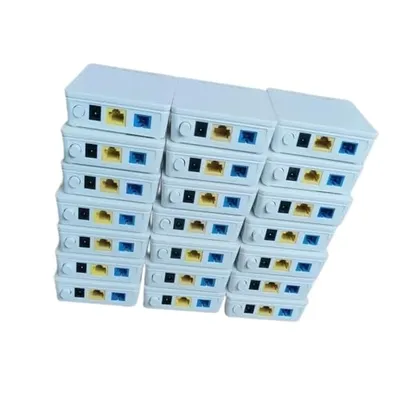
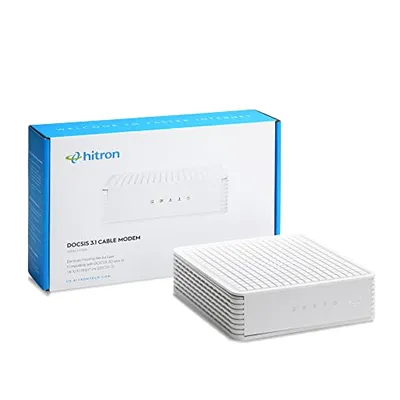
Implementing and optimizing upload speed involves both service provider infrastructure and end-user hardware. ISPs deploy OLTs and manage their optical distribution networks to deliver services. End-users utilize ONUs (often integrated into modems/routers provided by the ISP) and their own devices. The network interface card (NIC) in a computer, the wireless chipset in a smartphone, or the processor in a router all have a finite capacity for processing and transmitting data packets, which can become a bottleneck.
GPON ONU Capabilities
The specifications of a GPON ONU are critical for its upstream performance. These devices must be capable of synchronizing with the OLT, processing incoming bandwidth grants, modulating data onto the upstream wavelength at the allocated times, and performing error correction. More advanced ONUs might offer higher processing capabilities or support for multiple upstream TDM slots, but ultimately, they are constrained by the total upstream bandwidth managed by the OLT for their service group.
Applications Requiring High Upload Speed
While historically download speed was prioritized, modern digital activities increasingly demand robust upload capabilities:
- Cloud Storage and Backup: Uploading large files or performing frequent backups to services like Google Drive, Dropbox, or OneDrive.
- Video Conferencing and Streaming: Real-time transmission of high-definition video and audio for remote work, online education, and live broadcasts (e.g., YouTube, Twitch).
- Content Creation: Uploading large video files, photos, or other media to platforms for editing, sharing, or publication.
- Online Gaming: Transmitting player inputs and game state information to game servers.
- VoIP and Communication: Voice-over-IP services and other real-time communication applications.
- Remote Access and Collaboration: Accessing remote desktops or participating in collaborative editing sessions.
Asymmetrical vs. Symmetrical Upload Speeds
Broadband services are often categorized as asymmetrical or symmetrical. Asymmetrical services offer significantly higher download speeds than upload speeds, which is common in many DSL and Cable internet plans, and even many initial fiber deployments. Symmetrical services provide equal, or near-equal, speeds for both upload and download. Fiber optic technologies, particularly standards like symmetrical 10 Gbps PON (XG-PON or XGS-PON), are increasingly offering symmetrical speeds, catering to the growing demand for upstream bandwidth.
| Service Type | Typical Download Speed | Typical Upload Speed | Primary Technology | Asymmetry |
| ADSL | Up to 24 Mbps | Up to 3 Mbps | DSL (Copper) | High Asymmetry |
| VDSL | Up to 100 Mbps | Up to 10 Mbps | DSL (Copper) | High Asymmetry |
| Cable (DOCSIS 3.0) | Up to 1 Gbps | Up to 35-50 Mbps | Coaxial Cable | High Asymmetry |
| Cable (DOCSIS 4.0) | Up to 10 Gbps | Up to 6 Gbps | Coaxial Cable | Moderate Asymmetry |
| GPON | Up to 2.5 Gbps (shared) | Up to 1.25 Gbps (shared) | Fiber Optics | Moderate Asymmetry |
| XGS-PON | Up to 10 Gbps (shared) | Up to 10 Gbps (shared) | Fiber Optics | Symmetrical |
| Fixed Wireless Access (5G) | Varies Widely | Varies Widely | Radio Frequency | Varies Widely |
Future Outlook
The trajectory of internet service technology indicates a continuous drive towards higher bandwidth and reduced latency for both upstream and downstream traffic. As applications become more data-intensive and user-generated content proliferates, the importance of upload speed will only escalate. Future advancements in fiber optic technologies, such as higher-speed PON standards and coherent optics for direct fiber connections, alongside enhancements in wireless communication (e.g., Wi-Fi 7, 6G), will further push the boundaries of achievable upload rates, enabling more immersive and interactive digital experiences.