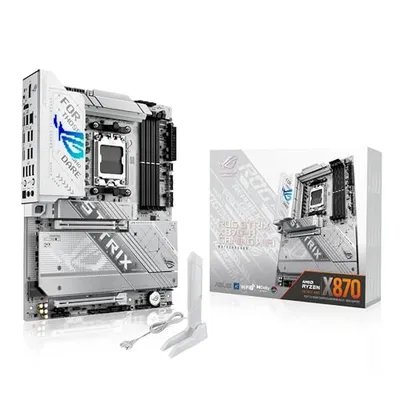
The term 'Third x16 Slot' conventionally refers to the third physical Peripheral Component Interconnect Express (PCIe) slot on a motherboard that operates at the x16 electrical lane configuration. PCIe is a high-speed serial computer expansion bus standard designed to replace older bus standards like PCI and AGP. An x16 slot provides the maximum bandwidth available in the PCIe standard, typically utilized by high-performance components such as discrete graphics processing units (GPUs), high-speed network interface cards (NICs), or specialized accelerators for data science and high-performance computing (HPC) workloads. The presence and configuration of multiple x16 slots are determined by the motherboard chipset, its lane distribution capabilities, and the overall system design intent, often catering to multi-GPU configurations or professional workstation environments demanding concurrent, high-throughput peripheral operation.
The 'third' designation implies a hierarchical or ordered enumeration of available slots, often based on their physical position relative to the CPU socket or other motherboard features, and crucially, their assigned PCIe lane allocation from the CPU or Platform Controller Hub (PCH). While a physical x16 slot can electrically operate at a reduced lane count (e.g., x8, x4, or x1), a true x16 electrical connection ensures the maximum theoretical data transfer rate for that specific PCIe generation. The number of available x16 slots and their operational lane configurations are critical factors for system builders and enthusiasts when designing systems for demanding applications, as insufficient bandwidth or slot availability can lead to performance bottlenecks or limit hardware expansion capabilities. Understanding the underlying PCIe topology, lane sharing mechanisms, and bandwidth limitations is paramount for optimizing system performance and ensuring compatibility with high-demand peripherals.
PCIe Slot Architecture and Lane Allocation
Physical and Electrical Configurations
A PCIe slot is characterized by its physical connector size and its electrical lane configuration. The x16 slot has the longest physical connector, accommodating a x16 lane interface. However, physical x16 slots can sometimes be wired for fewer electrical lanes (e.g., an x16 physical slot wired as x8 or x4). This is a common practice to maximize the number of available high-bandwidth slots on chipsets with limited PCIe lane availability. The effective bandwidth of a PCIe slot is a function of its lane count and the PCIe generation. For instance, PCIe 3.0 x16 offers a theoretical bidirectional bandwidth of approximately 31.5 GB/s, while PCIe 4.0 x16 doubles this to approximately 63 GB/s, and PCIe 5.0 x16 further doubles it again to approximately 126 GB/s. The 'third' x16 slot's performance is thus contingent on its electrical configuration and the PCIe generation it supports.
Lane Distribution from CPU and Chipset
Modern CPUs provide a certain number of direct PCIe lanes, typically used for the primary GPU slot(s) and NVMe SSDs. Additional PCIe lanes are provided by the motherboard chipset (PCH). These chipset lanes are multiplexed from a DMI (Direct Media Interface) link connecting the CPU to the PCH. The allocation of lanes to the motherboard's various slots, including the third x16 slot, is determined by the motherboard manufacturer and can involve complex routing and lane-sharing schemes. Often, multiple slots may share a common pool of lanes or a single link, meaning that populating one slot might electrically de-configure another, or reduce its available lanes. For the third x16 slot, it is common for it to be electrically x16 when it is the primary slot intended for a GPU, but if the system supports multiple GPUs, it might be x8 or even x4, especially if the chipset lanes are heavily utilized by other high-bandwidth devices.
Functionality and Applications
Graphics Processing Units (GPUs)
The primary application for x16 slots, especially the first one directly connected to the CPU, is for discrete GPUs. High-end graphics cards require the substantial bandwidth provided by x16 lanes for rendering complex scenes, processing textures, and transferring large amounts of data between the GPU memory and system RAM. The presence of a third x16 slot, particularly if it is also electrically x16, is relevant for professional users running multi-GPU compute tasks (e.g., CUDA or OpenCL acceleration) or for enthusiasts who wish to implement NVIDIA SLI or AMD CrossFire configurations, although these multi-GPU technologies have seen declining adoption in favor of single, more powerful GPUs or specific compute acceleration cards. For compute-intensive workloads like machine learning training, scientific simulations, or video rendering, having multiple GPUs installed across available x16 slots can significantly reduce processing times.
High-Speed Peripherals and Accelerators
Beyond GPUs, other high-bandwidth peripherals can benefit from an x16 slot. These include professional network interface cards (e.g., 100GbE or higher), high-speed storage controllers (though NVMe via M.2 slots is more common now), video capture cards, FPGA development boards, and dedicated AI accelerators. The 'third' x16 slot, if not occupied by a primary GPU, presents an opportunity to add such specialized hardware to a system. However, the decision to place a third x16 slot and its electrical configuration is a design choice influenced by market segmentation (e.g., gaming vs. workstation motherboards) and cost considerations. Workstation-grade motherboards are more likely to offer multiple, fully-fledged x16 slots to cater to professional demands.
Performance Considerations and Bottlenecks
Bandwidth Limitations
The performance of any device in a PCIe slot is fundamentally limited by the available bandwidth. While a physical x16 slot offers the potential for maximum throughput, its actual performance depends on its electrical configuration (x16, x8, x4) and the PCIe generation. A third x16 slot that is electrically x8 will provide half the theoretical bandwidth of an x16 connection. Furthermore, if the third x16 slot shares lanes with other devices (e.g., M.2 slots, other PCIe slots, or SATA ports) via the chipset, its bandwidth can be further constrained, especially when those other devices are active. This lane-sharing is a critical consideration for users seeking to maximize performance for all installed peripherals.
Latency and Throughput Metrics
While bandwidth is crucial, latency also plays a role, particularly in real-time applications. PCIe has relatively low latency compared to older bus architectures, but the number of hops (e.g., through the chipset vs. direct CPU connection) can introduce variations. Performance metrics relevant to the third x16 slot would include sequential read/write speeds for storage controllers, frames per second (FPS) for GPUs (though primarily benchmarked in primary slots), and computation throughput for accelerators. Benchmarking tools like CrystalDiskMark for storage, 3DMark for GPUs, and specialized HPC benchmarks for compute accelerators are used to quantify performance. When evaluating the third x16 slot, it is essential to consider whether its bandwidth and latency characteristics meet the requirements of the intended peripheral without becoming a performance bottleneck.
| PCIe Generation | Lanes | Theoretical Bidirectional Bandwidth per Lane (GB/s) | Theoretical Bidirectional Bandwidth x16 (GB/s) |
|---|---|---|---|
| PCIe 3.0 | 1 | ~0.985 | ~15.75 |
| PCIe 3.0 | 16 | ~0.985 | ~31.51 |
| PCIe 4.0 | 1 | ~1.969 | ~31.51 |
| PCIe 4.0 | 16 | ~1.969 | ~63.02 |
| PCIe 5.0 | 1 | ~3.938 | ~63.02 |
| PCIe 5.0 | 16 | ~3.938 | ~126.03 |
Industry Standards and Evolution
PCI SIG Standards
The Peripheral Component Interconnect Special Interest Group (PCI SIG) is responsible for defining and maintaining the PCIe specifications. Each generation (1.0, 2.0, 3.0, 4.0, 5.0, and upcoming 6.0) introduces significant improvements in bandwidth and features like improved signaling, error detection, and Quality of Service (QoS). Motherboard manufacturers adhere to these standards when designing the physical slots and electrical routing. The definition of an 'x16 slot' is standardized by the physical connector size and pinout, while the electrical lane count is a design choice implemented by the manufacturer based on the available PCIe lanes from the CPU and chipset and the target market segment. The evolution towards higher PCIe generations directly impacts the potential throughput of any x16 slot, including the third one.
Motherboard Design and Segmentation
The inclusion and configuration of a third x16 slot is a strategic decision in motherboard design. Entry-level motherboards may offer few PCIe slots, often prioritizing x1 or x4 configurations, and may only have one or two physical x16 slots, possibly wired as x8 or x4. Mainstream gaming motherboards typically feature at least two x16 slots, with the primary one often being electrically x16 and the secondary one x8, especially if they are both intended for GPUs. High-end workstation and HEDT (High-End Desktop) motherboards are more likely to offer multiple, fully electrically x16 slots, sometimes even supporting 4-way GPU configurations, to cater to professional workloads. The 'third' x16 slot is thus more commonly found on motherboards designed for expanded I/O or specific professional applications rather than mainstream consumer gaming setups.
Alternatives and Future Trends
M.2 Slots and NVMe
For high-speed storage, M.2 slots utilizing the NVMe protocol have become the predominant solution, often operating over PCIe x4 lanes. These offer performance competitive with, and often exceeding, SATA SSDs previously connected via PCIe x1 or x4 expansion cards. While NVMe M.2 slots offer high bandwidth in a compact form factor, they are not a direct replacement for x16 slots needed for GPUs or other high-throughput peripherals.
Integrated Peripherals and Connectivity
As technology advances, more I/O functionality is being integrated directly into the CPU or chipset, reducing reliance on discrete expansion cards for certain tasks. However, for components like high-performance GPUs, professional accelerators, and high-speed networking, dedicated PCIe slots, particularly x16 configurations, remain indispensable. Future trends in PCIe development (e.g., PCIe 6.0 and beyond) promise even greater bandwidth, enabling more powerful single-card solutions and allowing for more peripherals to coexist without bandwidth contention. The demand for specialized accelerators in AI and HPC will likely ensure the continued relevance of multiple high-lane-count PCIe slots on high-end motherboards.
The technical significance of the 'Third x16 Slot' lies in its potential to provide maximum PCIe bandwidth for peripheral expansion beyond primary component needs. Its utility is directly tied to the electrical configuration, PCIe generation, and lane allocation architecture of the motherboard, necessitating careful system design for high-performance computing, professional graphics, and specialized acceleration tasks. Understanding these intricate details ensures optimal system performance and hardware compatibility, addressing the demands of increasingly bandwidth-intensive applications and specialized computational workloads.