Telephone communication capabilities encompass the entire spectrum of functionalities and performance parameters that define the ability of a telephonic system or device to establish, maintain, and terminate voice (and increasingly, data) transmission between two or more endpoints. This involves a complex interplay of hardware, software, network protocols, and signaling mechanisms, governing aspects such as call setup time, audio fidelity (e.g., codecs, sampling rates, bit depth), signal-to-noise ratio, latency, jitter, echo cancellation, bandwidth utilization, and the support for advanced features like conferencing, call forwarding, caller ID, and voicemail integration. The robustness and efficiency of these capabilities are critical for ensuring a high-quality user experience, particularly in enterprise environments where productivity and clarity are paramount.
Within the context of GPON (Gigabit Passive Optical Network) features, telephone communication capabilities are typically addressed through Voice over IP (VoIP) or Voice over Broadband (VoBB) technologies. GPON systems facilitate high-speed data transport over fiber optic infrastructure, enabling the transmission of voice traffic alongside data and video services. This integration requires specific Quality of Service (QoS) mechanisms within the GPON network to prioritize voice packets, mitigating delay and jitter that would degrade conversational clarity. The capabilities here extend to the encapsulation of voice streams into IP packets, the utilization of protocols such as SIP (Session Initiation Protocol) or H.248 for call control, and the management of bandwidth allocation to guarantee a predefined level of service for voice users, distinguishing them from best-effort data traffic.
Mechanism of Action
The fundamental mechanism underpinning telephone communication capabilities, particularly in modern digital telephony and VoIP integrated with broadband networks like GPON, involves the digitization, packetization, and transmission of audio signals. Analog audio from a user's handset is converted into a digital stream via an Analog-to-Digital Converter (ADC). This digital audio is then compressed and encoded using specific codecs (e.g., G.711, G.729, Opus) to optimize bandwidth usage while maintaining acceptable voice quality. Subsequently, these encoded audio data segments are encapsulated into packets, typically following Internet Protocol (IP). These IP packets include header information that dictates routing, sequencing, and error correction. In a GPON context, these voice packets are prioritized using mechanisms like traffic shaping and bandwidth allocation based on QoS parameters, ensuring they traverse the optical network with minimal delay and jitter. At the receiving end, the process is reversed: packets are de-sequenced, decoded, and converted back into an analog audio signal by a Digital-to-Analog Converter (DAC) for playback through the receiving handset. Signaling protocols like SIP manage the establishment, modification, and termination of these connections, coordinating the exchange of session information between endpoints.
Voice Codecs and Quality Metrics
The selection and implementation of voice codecs are central to defining telephone communication capabilities. Different codecs offer varying trade-offs between compression efficiency (bandwidth usage), computational complexity, and voice quality. Standard codecs include:
- G.711: Offers near toll-quality audio with minimal processing overhead but uses 64 kbps per channel, uncompressed.
- G.729: Provides good quality at significantly lower bandwidth (around 8 kbps) through sophisticated speech compression algorithms, but incurs higher processing load.
- Opus: A modern, versatile, and open-source codec that adapts its bit rate and complexity based on network conditions and audio content, offering excellent quality across a wide range of bandwidths and latency requirements.
Key metrics for evaluating voice quality include Mean Opinion Score (MOS), which is a subjective measure of perceived speech quality, and objective metrics such as:
- Latency (Delay): The time taken for a voice packet to travel from source to destination. Excessive latency hinders natural conversation flow.
- Jitter: Variation in the arrival time of voice packets. High jitter can cause gaps or distortions in speech.
- Packet Loss: The percentage of voice packets that fail to reach their destination. High packet loss leads to missing words or syllables.
- Echo: Undesired reflections of the transmitted signal at the far end, often requiring echo cancellation mechanisms.
GPON Integration and QoS
In GPON systems, telephone communication capabilities are realized by integrating Voice over IP (VoIP) services. The Optical Network Unit (ONU) or Optical Network Terminal (ONT) at the customer premises typically houses an Integrated Access Device (IAD) that includes an Analog Telephone Adapter (ATA) or IP phone ports. The GPON MAC layer employs a dynamic bandwidth assignment (DBA) scheme to allocate upstream bandwidth. For voice traffic, specific GEM (GPON Encapsulation Method) ports can be configured with strict QoS policies to ensure that voice packets receive preferential treatment. This involves assigning higher priority queues and guaranteeing minimum bandwidth allocations, thereby minimizing latency and jitter to support real-time conversational requirements. The bandwidth profile for voice services is crucial; for instance, a 100 Mbps symmetric GPON link can comfortably support numerous HD voice calls alongside substantial data traffic due to effective QoS implementation.
Industry Standards
The capabilities of telephone communication are governed by a vast array of international and industry-specific standards. For digital telephony and VoIP, key standards bodies and their contributions include:
- ITU-T (International Telecommunication Union - Telecommunication Standardization Sector): Defines foundational standards for telecommunications, including codecs (e.g., G.711, G.729, G.722 for wideband audio), signaling protocols (e.g., H.323), and Quality of Service parameters.
- IETF (Internet Engineering Task Force): Develops and standardizes the Internet Protocol suite, including protocols essential for VoIP such as SIP (RFC 3261) for session control, RTP (Real-time Transport Protocol) for media transport, and RTCP (RTP Control Protocol) for quality feedback.
- ETSI (European Telecommunications Standards Institute): Contributes to standards for telecommunications in Europe, often harmonizing with ITU-T and IETF, and developing specifications for specific services like DECT (Digital Enhanced Cordless Telecommunications).
- IEEE (Institute of Electrical and Electronics Engineers): Sets standards for network hardware and protocols, including Ethernet (IEEE 802.3) and Wi-Fi (IEEE 802.11), which are fundamental for the physical layer connectivity of IP-based communication systems.
- MEF (Metro Ethernet Forum): Defines standards for Carrier Ethernet services, which often underpin the transport of IP voice traffic across metropolitan networks.
In the specific context of GPON, the ITU-T G.984 series of standards defines the technical specifications for Gigabit-speed Passive Optical Networks, including provisions for Quality of Service (QoS) to support various services like voice, data, and video concurrently.
Evolution
Telephone communication capabilities have undergone a profound evolution from early analog, circuit-switched systems to sophisticated, packet-switched, IP-based multimedia communication platforms. Initially, telephone networks were based on dedicated physical circuits for each call, offering high reliability and low latency but limited flexibility and high infrastructure cost. The advent of digital switching and transmission (e.g., TDM - Time Division Multiplexing) improved efficiency and introduced basic digital features. The major paradigm shift occurred with the development and widespread adoption of Voice over IP (VoIP). This transition enabled voice traffic to be transported as data packets over IP networks, leveraging the internet infrastructure. VoIP introduced significant advancements: convergence of voice and data services, reduced operational costs, enhanced mobility, and the integration of advanced features like unified communications. Within broadband access technologies like GPON, these capabilities are further refined through sophisticated QoS mechanisms, enabling high-definition voice (HD Voice) and supporting a growing number of concurrent calls with superior audio quality and reduced latency compared to earlier VoIP implementations over less optimized networks.
Practical Implementation
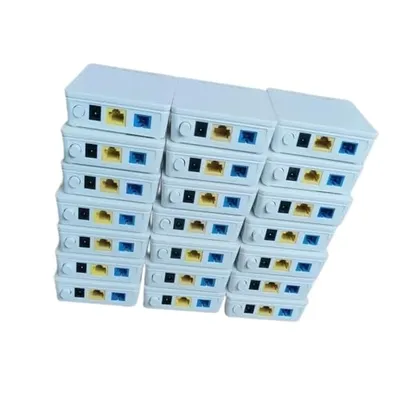
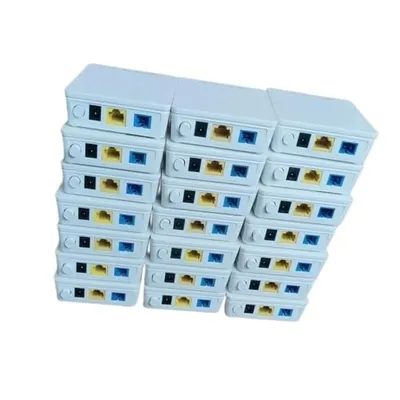
The practical implementation of telephone communication capabilities, particularly within a GPON framework, involves several key components and considerations. At the network edge, an Optical Network Terminal (ONT) or Optical Network Unit (ONU) serves as the customer premises equipment. This device translates optical signals to electrical signals and typically integrates functionalities such as an Ethernet switch, Wi-Fi access point, and critically, a Voice Gateway or ATA. This gateway terminates the voice streams, interfacing with standard analog telephones or providing an IP endpoint for IP phones. The gateway handles the encoding/decoding of voice using chosen codecs, packetization into IP packets, and adherence to VoIP protocols like SIP for call signaling and RTP for media transport. On the network side, the Optical Line Terminal (OLT) at the service provider's central office manages multiple ONTs/ONUs. The OLT, in conjunction with the broader network infrastructure (e.g., softswitches, media gateways, IP PBXs), orchestrates call routing, subscriber management, and the application of Quality of Service (QoS) policies. The GPON standard's GEM framing and DBA algorithms are crucial for ensuring that voice packets are prioritized and receive adequate bandwidth, thus guaranteeing low latency and jitter essential for a high-quality calling experience. Service providers must carefully provision bandwidth profiles and QoS parameters for voice services to meet demanding Service Level Agreements (SLAs).
Performance Metrics and Testing
Evaluating the performance of telephone communication capabilities requires rigorous testing against defined metrics. Key performance indicators (KPIs) include:
- Call Setup Time: The duration from initiating a call to the point where the call is established and audio can be transmitted. Standards typically target under 3-5 seconds.
- Voice Quality (MOS): Subjective testing to achieve MOS scores of 4.0 or higher for standard voice and 4.4 or higher for HD Voice.
- Latency: End-to-end delay should ideally be below 150 ms for conversational quality, with some standards recommending below 50 ms for optimal HD Voice.
- Jitter Buffer Size and Performance: The size of the jitter buffer on the receiving endpoint needs to be configured to absorb variations while minimizing added delay.
- Packet Loss Tolerance: The system's ability to maintain acceptable voice quality with a certain level of packet loss (e.g., up to 1-2% for G.711, higher for more robust codecs like Opus with error concealment).
- Echo Return Loss (ERL): Measured in decibels (dB), indicating the effectiveness of echo cancellation. Higher values (e.g., >40 dB) are preferred.
- Upstream/Downstream Throughput: Verified to ensure sufficient bandwidth is allocated for voice traffic, especially in shared GPON segments.
Testing methodologies often involve specialized voice quality testing equipment and software that can simulate real-world network conditions (e.g., introducing latency, jitter, and packet loss) and objectively measure voice quality using algorithms like POLQA (Perceptual Objective Listening Quality Assessment).
Applications
Telephone communication capabilities are fundamental to a vast array of applications and services:
- Residential Telephony: Providing basic voice calling services for households, often bundled with internet and television services over broadband platforms like GPON.
- Business Voice Services: Supporting internal and external communications for enterprises, ranging from small offices with basic PBXs to large corporations with complex unified communications (UC) platforms.
- Contact Centers: Enabling high-volume inbound and outbound call handling, including features like Automatic Call Distribution (ACD), Interactive Voice Response (IVR), and workforce management.
- Emergency Services (e.g., 911/112): Ensuring reliable and rapid communication for emergency response, often requiring specific network provisioning and location tracking capabilities.
- Telemedicine: Facilitating remote consultations and diagnostics where clear, uninterrupted audio is critical.
- Remote Work and Collaboration: Supporting distributed workforces through high-quality voice conferencing, softphones, and integration with other collaboration tools.
- Public Switched Telephone Network (PSTN) Interconnection: Enabling seamless communication between IP-based telephony systems and traditional circuit-switched networks.
Pros and Cons
Pros
- Enhanced Quality: Modern digital and IP-based systems, especially when optimized on GPON with QoS, offer superior audio fidelity (HD Voice) compared to traditional analog telephony.
- Cost Efficiency: VoIP and integrated services over GPON often reduce per-line costs for both service providers and end-users due to shared infrastructure and packet-switched efficiencies.
- Feature Richness: Support for advanced features such as caller ID, voicemail, call forwarding, conferencing, presence information, and integration with other business applications.
- Scalability: IP-based systems are highly scalable, allowing for easy addition or removal of lines and features.
- Convergence: Enables the integration of voice, data, and video services over a single network infrastructure, simplifying management and reducing costs.
- Mobility: Softphones and mobile integration allow users to make and receive calls from various devices, independent of their physical location.
Cons
- Dependency on Network Quality: Voice quality is highly susceptible to network performance issues like latency, jitter, and packet loss if QoS is not properly implemented, especially in shared environments.
- Power Requirements: Most IP-based phones and gateways require local power, meaning they may not function during power outages unless backup power solutions (UPS) are in place, unlike traditional POTS lines that draw power from the network.
- Security Vulnerabilities: IP-based communication is susceptible to network-based security threats such as denial-of-service attacks, eavesdropping, and toll fraud if not adequately secured.
- Complexity of Implementation: Setting up and managing advanced IP telephony systems can require specialized expertise.
- Codec Trade-offs: Higher compression codecs save bandwidth but can introduce computational overhead and slightly reduced voice quality.
Architecture
The architecture supporting telephone communication capabilities, particularly in a GPON-integrated VoIP system, typically comprises several layers:
- Physical Layer: Fiber optic cabling (GPON OLT/ONT) providing high-speed transport.
- Data Link Layer: GPON MAC layer, responsible for framing, multiplexing, and dynamic bandwidth allocation (DBA) with QoS mechanisms.
- Network Layer: IP for packet routing across the network.
- Transport Layer: UDP for real-time media transport (due to lower overhead and tolerance for some loss) and TCP for reliable signaling.
- Application Layer: Protocols like SIP or H.248 for call control and management, and RTP/RTCP for media stream transport and quality feedback. Voice codecs (e.g., G.711, G.729, Opus) operate at this layer for audio compression/decompression.
- Service Layer: Includes elements like softswitches (call control servers), media gateways (for PSTN interconnection or media processing), AAA servers (authentication, authorization, accounting), and subscriber databases.
- Endpoint Devices: Analog Telephones (via ATA), IP Phones, Softphones running on computers or mobile devices.
In a GPON network, the OLT acts as the central hub, managing traffic flow and QoS for multiple ONTs. The ONTs perform the voice gateway functions, converting analog voice to IP packets and vice-versa, and ensuring these packets are prioritized according to network policies.
Alternatives
While telephone communication capabilities are often associated with traditional voice calls, several alternative or complementary communication modalities exist and continue to evolve:
- Circuit-Switched Telephony (PSTN): The legacy analog telephone network, still operational but largely being phased out in favor of IP-based services. Offers high reliability in power outages but lacks flexibility and advanced features.
- Mobile Cellular Voice: Voice calls transmitted over cellular networks (2G, 3G, 4G LTE, 5G). Provides ubiquitous mobility but can be subject to varying signal quality and coverage.
- Instant Messaging and Text-Based Chat: Platforms like WhatsApp, Signal, Slack, and Microsoft Teams offer text-based communication, often with file sharing and presence features.
- Video Conferencing: Services like Zoom, Microsoft Teams, Google Meet, and Cisco Webex provide real-time audio and video communication, increasingly incorporating advanced collaboration features.
- Web Real-Time Communication (WebRTC): An open-source project enabling real-time voice, video, and data communication directly within web browsers, without requiring plugins, often used for embedded communication features in web applications.
These alternatives often overlap and integrate with traditional telephone capabilities, forming part of a broader spectrum of unified communications and collaboration tools.
| Parameter | Typical Value (GPON VoIP) | Impact |
|---|---|---|
| Codec | G.711 (PCMU/A) / G.729a / Opus | Bandwidth consumption and voice fidelity |
| Bit Rate (per call) | 64 kbps (G.711) / 8 kbps (G.729a) / Adaptive (Opus) | Network utilization; higher is better quality/more bandwidth |
| Latency (End-to-End) | < 150 ms (Target < 50 ms for HD Voice) | Conversational flow and interactivity |
| Jitter | < 30 ms (Absorbed by buffer) | Speech continuity and intelligibility |
| Packet Loss Tolerance | 1-2% (G.711/G.729) / Higher with Opus error concealment | Audio continuity; noticeable degradation beyond tolerance |
| MOS Score | > 4.0 (Standard) / > 4.4 (HD Voice) | Subjective perceived voice quality |
| Call Setup Time | < 5 seconds | User experience and service responsiveness |
| Echo Return Loss | > 40 dB | Minimizes distracting echoes |
| Bandwidth Reservation (QoS) | Configurable minimum bandwidth allocation | Guarantees service availability for voice |