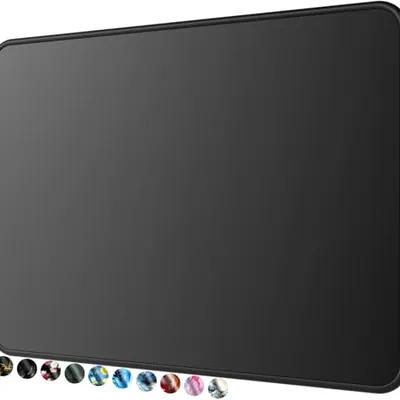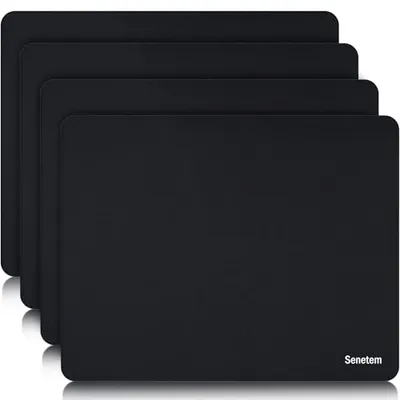
Surface Type, in the context of materials science and engineering, denotes a classification or categorization of the outermost layer of a solid object. This classification is based on inherent physical, chemical, and mechanical properties that dictate how the surface interacts with its environment and other materials. These properties are critical in determining a material's performance in various applications, influencing phenomena such as adhesion, friction, wear, corrosion resistance, optical reflectivity, electrical conductivity, and thermal transfer. The characterization of Surface Type often involves analysis of surface topography (roughness, waviness), surface chemistry (composition, elemental distribution, chemical bonding states), surface energy, and the presence of any surface treatments, coatings, or films. Precise definition and control of Surface Type are paramount in industries ranging from microelectronics and aerospace to biomedical devices and automotive manufacturing.
The significance of Surface Type extends beyond its intrinsic material characteristics to encompass its prepared state and functional attributes. In manufacturing, processes such as machining, grinding, polishing, etching, deposition, and surface modification directly alter and define the Surface Type. Different applications necessitate distinct Surface Types; for instance, a high-friction surface is desirable for tire treads, while a low-friction, self-cleaning surface might be required for optical lenses or medical implants. Standards organizations, such as ISO and ASTM, often provide frameworks for classifying and measuring surface characteristics, enabling consistent communication and quality control across different industrial sectors. Understanding and specifying the correct Surface Type is thus a fundamental aspect of product design, process engineering, and quality assurance.
Surface Characterization and Properties
The definition and differentiation of Surface Types rely on a suite of analytical techniques that probe the outermost atomic or molecular layers. These techniques provide quantifiable data regarding the surface's physical and chemical constitution.
Physical Characteristics
Topography and Roughness
Surface topography refers to the three-dimensional shape of the surface, including macro-scale features, micro-scale texture, and nano-scale irregularities. Surface roughness, a key parameter, quantifies the deviation of a surface from its ideal form. Common parameters include:
- Ra (Arithmetic Average Roughness): The arithmetic average of the absolute values of the profile height deviations from the mean line.
- Rq (Root Mean Square Roughness): The root mean square average of the profile height deviations from the mean line.
- Rz (Mean Roughness Depth): The average distance between the five highest peaks and the five lowest valleys within a sampling length.
Instrumentation such as stylus profilometers, optical profilometers (e.g., white light interferometry), and atomic force microscopy (AFM) are employed for topographic measurements. The chosen measurement technique depends on the scale of features to be analyzed and the required resolution.
Surface Energy and Wettability
Surface energy is a measure of the excess energy at the surface of a material compared to the bulk. It influences how liquids interact with the surface, commonly assessed through contact angle measurements. A low surface energy material tends to repel liquids (hydrophobic), while a high surface energy material attracts them (hydrophilic). This is crucial for applications involving coatings, printing, and biological interactions.
Chemical Characteristics
Surface Composition and Chemistry
The chemical composition of the surface may differ significantly from the bulk material due to segregation, oxidation, or processing effects. Techniques like X-ray Photoelectron Spectroscopy (XPS), Auger Electron Spectroscopy (AES), and Secondary Ion Mass Spectrometry (SIMS) provide elemental and chemical state information about the surface layer, often with high sensitivity and spatial resolution.
Surface Films and Coatings
Many Surface Types are defined by the presence of intentionally applied films or coatings. These can include:
- Metallic Coatings: For corrosion resistance, electrical conductivity, or decorative purposes (e.g., galvanization, chrome plating).
- Polymeric Coatings: For wear resistance, chemical protection, or aesthetic appeal (e.g., paints, powder coatings, fluoropolymer films).
- Ceramic Coatings: For high-temperature resistance, hardness, or biocompatibility (e.g., thermal spray coatings, PVD/CVD layers).
- Functional Coatings: Such as anti-reflective, anti-microbial, or hydrophobic treatments.
Classification Systems and Standards
Standardized methods for defining and measuring Surface Type are essential for interdisciplinary communication and quality control. Various industries and international bodies have established guidelines.
Industry-Specific Standards
Different sectors employ specific standards tailored to their unique requirements:
- Automotive: Standards for paint finish quality, adhesion, and resistance to environmental factors.
- Aerospace: Stringent requirements for surface integrity, fatigue life, and resistance to wear and corrosion, often involving specialized coatings and treatments.
- Microelectronics: Extremely high purity and precise topography control for semiconductor substrates, wafers, and device layers. Standards address particle contamination, surface flatness, and electrical properties.
- Biomedical: Focus on biocompatibility, inertness, and specific surface chemistries to promote or inhibit cellular adhesion and growth. Standards like ISO 10993 guide the assessment of medical device materials.
International Standards
Organizations such as the International Organization for Standardization (ISO) and ASTM International develop widely adopted standards. For surface texture, ISO 4287 and ASME B46.1 are foundational.
Proposed Technical Table: Comparative Surface Type Metrics
The following table illustrates typical metrics used to define and differentiate common surface types in engineering applications:
| Surface Type Description | Primary Application Focus | Typical Ra (µm) | Surface Chemistry Focus | Key Performance Indicators |
|---|---|---|---|---|
| Ground Metal Surface | Machined components, structural elements | 0.4 - 1.6 | Bulk metal, oxide layer | Dimensional accuracy, fatigue strength |
| Polished Optical Surface | Lenses, mirrors, high-precision instruments | < 0.01 | Pure substrate material or specific optical coating | Optical clarity, wavefront distortion, reflectivity |
| Plasma-Treated Polymer | Adhesion promotion for bonding/coating | Variable (surface functionalization) | Introduction of polar functional groups (e.g., -OH, -COOH) | Wettability, bond strength |
| Anodized Aluminum | Corrosion resistance, wear resistance, decorative | 1.0 - 5.0 (after anodization) | Aluminum oxide layer (porous or sealed) | Corrosion resistance, hardness, color uniformity |
| Cleanroom Wafer Surface | Semiconductor manufacturing | < 0.001 | Ultra-pure silicon oxide or bare silicon, minimal contaminants | Particle count, surface defect density, chemical purity |
Surface Modification Techniques
Various techniques are employed to achieve a desired Surface Type, either from a raw material state or to enhance existing properties.
Mechanical Methods
These involve physical alteration of the surface topography and microstructure. Examples include grinding, lapping, polishing, sandblasting, and shot peening. These methods are often used to improve surface finish, induce compressive residual stresses, or prepare surfaces for subsequent treatments.
Thermal Methods
Techniques like heat treatment, laser hardening, and thermal spraying modify the surface's microstructure and hardness by controlled heating and cooling. Thermal spraying (e.g., plasma spray, HVOF) applies molten or semi-molten materials to create thick, functional coatings.
Chemical Methods
Chemical treatments alter the surface chemistry. This includes etching (acid or alkaline), passivation, anodizing, and chemical vapor deposition (CVD). These processes can remove surface contaminants, create protective oxide layers, or deposit thin films of other materials.
Physical Methods
Physical Vapor Deposition (PVD) techniques such as sputtering and evaporation are used to deposit thin films of metals, ceramics, or alloys onto substrates under vacuum. Plasma treatments and ion implantation also fall under this category, modifying surface chemistry and introducing desirable properties like hardness or wear resistance.
Energy Beam Methods
Laser and electron beam treatments can precisely alter surface properties through localized melting, re-solidification, or surface alloying, enabling complex surface patterning and modification.
Applications and Implications
The correct specification and realization of Surface Type are critical across numerous technological domains.
Materials Science and Engineering
Understanding Surface Type is foundational for predicting material behavior under service conditions. For instance, the surface of a metal dictates its susceptibility to corrosion, while the surface of a polymer influences its interaction with solvents or UV radiation. The interface between different materials in a composite or multi-layer structure is governed by their respective Surface Types, impacting mechanical integrity and functional performance.
Manufacturing and Quality Control
In precision manufacturing, maintaining tight tolerances on Surface Type is often a primary quality objective. Deviations can lead to premature component failure, reduced product lifespan, or performance degradation. Automated inspection systems and in-line metrology are increasingly employed to monitor Surface Type during production.
Biotechnology and Medicine
The biocompatibility of medical implants, prosthetics, and diagnostic devices is heavily dependent on their Surface Type. Tailoring surface chemistry and topography can promote integration with biological tissues, prevent immune rejection, or inhibit bacterial colonization, thereby reducing infection risks.
Electronics and Photonics
In the semiconductor industry, Surface Type uniformity and cleanliness are paramount for device yield and performance. For optical components, precise control over surface roughness and refractive index profiles is essential for efficient light manipulation.
Future Trends
Research and development continue to push the boundaries of Surface Type engineering. Advanced techniques are enabling the creation of surfaces with highly specialized functionalities, such as self-healing properties, programmable wettability, and tailored electronic band structures. The integration of artificial intelligence and machine learning with surface characterization and modification processes is expected to accelerate the discovery and optimization of novel Surface Types for next-generation technologies. Nanotechnology plays a pivotal role, allowing for the fabrication of surfaces with engineered features at the atomic and molecular scale, leading to unprecedented control over material interactions and performance characteristics.