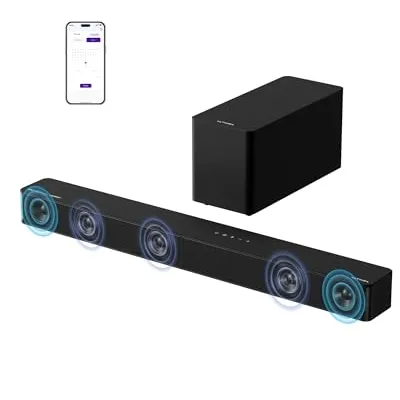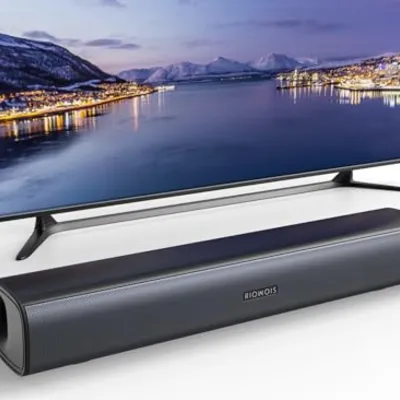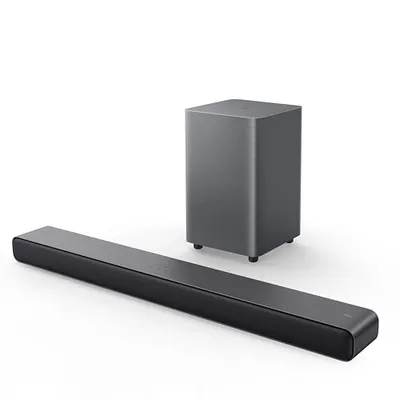
Sound Technology Type refers to a discrete classification or categorization of systems, devices, or methodologies employed for the generation, transmission, reception, manipulation, or reproduction of acoustic energy. This classification is typically predicated upon fundamental physical principles, operational paradigms, signal processing algorithms, or the intended application domain. Each type is characterized by a unique set of technical specifications, performance metrics, and architectural considerations that dictate its efficacy and suitability for specific acoustic phenomena and use cases. Understanding these distinctions is critical for the precise selection, design, and optimization of audio-related systems across a broad spectrum of scientific and industrial applications.
The categorization of Sound Technology Types spans a continuum from basic electroacoustic transducers, such as microphones and loudspeakers governed by principles of electromagnetism and piezoelectricity, to complex digital audio processing chains involving advanced signal compression codecs, spatial audio rendering engines, and sophisticated acoustic modeling software. These types are often defined by their fidelity requirements, bandwidth limitations, latency characteristics, power consumption profiles, and the underlying signal domains (analog vs. digital) in which they operate. Furthermore, the evolution of materials science, semiconductor technology, and computational power continuously introduces novel sound technology types, necessitating ongoing refinement of existing typologies and the development of new classification frameworks.
Mechanism of Action
The fundamental mechanisms underpinning various Sound Technology Types are diverse, rooted in physics and engineering. Electroacoustic transducers convert acoustic energy to electrical signals (e.g., microphones) or vice versa (e.g., loudspeakers). Microphones commonly employ dynamic (electromagnetic induction), condenser (capacitance variation), or piezoelectric principles. Dynamic microphones utilize a diaphragm attached to a voice coil within a magnetic field; sound waves move the diaphragm, inducing a current. Condenser microphones require external power (phantom power) to charge a capacitor formed by a diaphragm and a backplate; sound pressure variations alter the capacitance, modulating the voltage. Piezoelectric microphones use materials that generate a voltage when stressed by sound waves.
Conversely, loudspeakers generate sound by converting electrical signals into mechanical vibrations. Common types include dynamic (moving coil) loudspeakers, where an electrical current in a voice coil generates a magnetic field that interacts with a permanent magnet, causing the attached cone to move and displace air; ribbon loudspeakers, which use a corrugated metallic ribbon suspended in a magnetic field; and electrostatic loudspeakers, employing a charged diaphragm placed between two charged grids, where electrical signals create varying electric fields that move the diaphragm.
Industry Standards and Formats
Several industry standards and proprietary formats define the operational parameters and interoperability of Sound Technology Types. In digital audio, standards like the PCM (Pulse-Code Modulation) format, as defined in the AES3 (AES/EBU) and S/PDIF interfaces, specify uncompressed digital audio. Lossy compression standards, such as MP3 (MPEG-1 Audio Layer III) and AAC (Advanced Audio Coding), utilize psychoacoustic models to reduce file size by discarding inaudible data, with defined bitrates and sample frequencies. Lossless compression formats like FLAC (Free Lossless Audio Codec) and ALAC (Apple Lossless Audio Codec) preserve audio integrity while achieving moderate compression ratios.
For professional audio, standards like DANTE (Digital Audio Network), AVB (Audio Video Bridging), and AES67 define network-based audio distribution protocols, ensuring interoperability for real-time audio over IP. Loudspeaker performance is often characterized by standards from the Audio Engineering Society (AES) and industry bodies like the Consumer Technology Association (CTA), specifying parameters such as frequency response, sensitivity, impedance, and power handling. Acoustic measurement methodologies are guided by ISO standards (e.g., ISO 3382 for room acoustics) and ANSI standards, ensuring reproducible and comparable data.
Evolution and Historical Development
The evolution of Sound Technology Types commenced with early acoustic devices like the phonograph and gramophone in the late 19th century, transitioning to electrical recording and reproduction in the early 20th century with vacuum tube amplifiers and magnetic recording. The advent of transistors in the mid-20th century miniaturized audio electronics, leading to more portable and efficient systems. Analog magnetic tape recording dominated for decades before the digital revolution of the late 20th century introduced digital audio workstations (DAWs), CD-ROMs, and digital signal processing (DSP) for effects and manipulation. The late 20th and early 21st centuries have seen the proliferation of digital audio formats, network audio protocols, surround sound technologies (e.g., Dolby Digital, DTS), and object-based audio rendering (e.g., Dolby Atmos), driven by advancements in microprocessors, data compression algorithms, and high-fidelity reproduction techniques.
Applications
Sound Technology Types find application across a vast array of domains. In consumer electronics, they are integral to personal audio devices (headphones, portable speakers), home theater systems, and musical instruments. The professional audio industry relies on them for music production, live sound reinforcement, broadcasting, and film post-production. In telecommunications, they enable voice and data transmission through microphones, speakers, and codecs. In industrial settings, they are used for acoustic monitoring, non-destructive testing (ultrasonics), noise cancellation, and industrial automation control.
Further specialized applications include medical diagnostics (ultrasound imaging), underwater acoustics (sonar), architectural acoustics for concert halls and studios, and research instrumentation for acoustic analysis and psychoacoustic studies. Each application leverages specific Sound Technology Types optimized for its unique environmental and performance requirements, such as high signal-to-noise ratios, extended frequency response, directional sensitivity, or precise temporal resolution.
Pros and Cons
| Sound Technology Type | Pros | Cons |
| Analog Signal Processing | Potentially higher fidelity in some instances, simpler circuits for basic functions, no quantization error. | Susceptible to noise, degradation over time, limited flexibility for complex manipulations, bulkier components. |
| Digital Signal Processing (DSP) | High flexibility, reproducibility, noise immunity, advanced manipulation capabilities (filtering, compression, spatialization), miniaturization. | Requires analog-to-digital (ADC) and digital-to-analog (DAC) conversion (potential for latency and artifacts), computational overhead, susceptible to digital errors if not managed. |
| Lossy Compression (e.g., MP3, AAC) | Significantly reduced file sizes, enabling efficient storage and streaming. | Irreversible data loss, potential audible artifacts at low bitrates, reduced fidelity compared to original source. |
| Lossless Compression (e.g., FLAC, ALAC) | Preserves original audio quality, smaller file sizes than uncompressed formats, reversible. | Larger file sizes than lossy formats, requires more processing power for decompression compared to lossy. |
| Uncompressed PCM | Absolute highest fidelity, no data loss or artifacts. | Very large file sizes, inefficient for storage and transmission without dedicated high-bandwidth infrastructure. |
Performance Metrics
The performance of Sound Technology Types is rigorously evaluated using a suite of metrics. Key performance indicators (KPIs) for transducers include frequency response (the range of frequencies a device can accurately reproduce or capture, often measured in Hertz), sensitivity (output level for a given input, e.g., dB SPL per milliwatt), total harmonic distortion (THD) plus noise (THD+N), signal-to-noise ratio (SNR), dynamic range, and transient response. For digital audio systems, latency (the delay between input and output) is a critical metric, especially in real-time applications.
In signal processing, metrics include sampling rate (samples per second, e.g., 44.1 kHz, 48 kHz, 96 kHz), bit depth (number of bits per sample, e.g., 16-bit, 24-bit, determining dynamic range), codec efficiency (compression ratio vs. audible quality degradation), and computational complexity (affecting power consumption and processing requirements). Networked audio protocols are assessed on jitter (variation in timing of digital signals), packet loss resilience, and achievable channel count and bandwidth.
Architectural Considerations
The architecture of a sound technology system dictates its functionality and performance. Analog systems often involve discrete components like amplifiers, filters, and mixers, requiring careful impedance matching and shielding to minimize interference. Digital audio architectures typically comprise ADCs, DSP chips or processors, DACs, and memory. The data flow involves capturing analog audio, converting it to digital, processing it digitally (e.g., equalization, compression, reverb), and converting it back to analog for output.
Networked audio architectures, like those using Dante or AVB, involve specialized hardware interfaces (network audio interfaces/bridges) and software control layers that manage audio streams over standard Ethernet infrastructure. These systems are designed for scalability, flexibility in routing, and centralized control. The choice of architecture is heavily influenced by factors such as required fidelity, real-time processing needs, integration complexity, and cost constraints.
Alternatives and Future Outlook
While established Sound Technology Types continue to be refined, research and development are pushing boundaries. Alternatives to traditional transducer designs include advancements in MEMS (Micro-Electro-Mechanical Systems) microphones offering miniaturization and integration capabilities, and planar magnetic headphones that provide alternative driver technologies for high-fidelity personal audio. In audio processing, the increasing power of AI and machine learning is leading to intelligent audio processing, adaptive noise cancellation, and more sophisticated source separation algorithms.
Future developments are likely to focus on immersive audio experiences beyond current surround and object-based formats, potentially involving personalized acoustic rendering based on individual head-related transfer functions (HRTFs). Further integration of audio processing with haptic feedback systems and advancements in low-latency, high-resolution wireless audio transmission will also shape the landscape of Sound Technology Types, driving new applications in augmented reality, virtual reality, and advanced human-computer interaction.