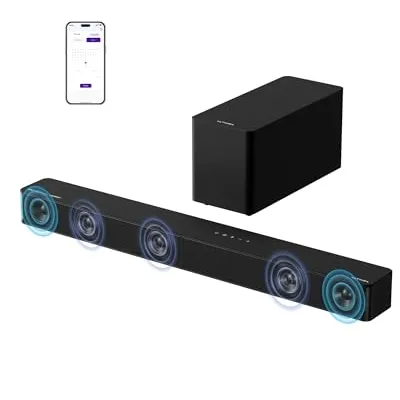
Real Output Power (RMS) refers to the effective power delivered by an audio amplifier or loudspeaker system under continuous, dynamic signal conditions, as opposed to peak or instantaneous power. It is calculated by taking the square root of the mean of the squared values of the signal over a specific period, a mathematical operation that aligns with how audio power affects thermal dissipation and mechanical stress within the components. This metric is crucial for objectively comparing the sustained performance capabilities of audio equipment, as it provides a more realistic representation of the power an amplifier can continuously produce without causing distortion or damage to the associated transducers.
The RMS power rating is intrinsically linked to the Root Mean Square (RMS) value of a waveform, which is a statistical measure of the magnitude of a varying quantity. For sinusoidal signals, the RMS value is approximately 0.707 times the peak value. In audio engineering, specifying power in RMS accounts for the fact that audio signals are complex and rarely pure sinusoids, exhibiting fluctuating amplitudes and durations. Therefore, RMS power indicates the average power an amplifier can deliver over time to a specified load impedance, typically 4 or 8 ohms, without exceeding a defined level of total harmonic distortion (THD). This standardization ensures that consumers and engineers have a reliable benchmark for assessing audio equipment's genuine output capability.
Mechanism of Action and Calculation
The fundamental principle behind Real Output Power (RMS) is the conversion of electrical energy into mechanical energy (sound waves) by a transducer, such as a loudspeaker. During this conversion, electrical power is dissipated as heat due to the internal resistance of the speaker's voice coil and the amplifier's output stage. RMS power is defined as the power dissipated by a resistive load that would produce the same amount of heat as the actual time-varying signal. Mathematically, for a voltage signal v(t) across a resistance R, the instantaneous power is p(t) = v(t)² / R. The mean power over a time interval T is given by P_mean = (1/T) ∫₀ᵀ [v(t)² / R] dt.
The Root Mean Square (RMS) of a voltage signal v(t) is defined as V_rms = √[(1/T) ∫₀ᵀ v(t)² dt]. Consequently, the RMS power delivered to a resistance R is P_rms = V_rms² / R. This calculation effectively averages the power delivered over time, giving more weight to higher instantaneous power values due to the squaring operation. This is particularly relevant for audio signals because the perceived loudness is related to the average power delivered, and exceeding the RMS power rating for extended periods can lead to thermal runaway and damage to amplifier components or speaker voice coils.
Industry Standards and Definitions
Several organizations and standards bodies provide guidelines for measuring and specifying amplifier power. The International Electrotechnical Commission (IEC) standards, such as IEC 60268-3, define methodologies for measuring amplifier output power. These standards typically specify the test signal (e.g., a sine wave or pink noise), the duration of the test (continuous or short-term), the load impedance, and the maximum allowable total harmonic distortion (THD) plus noise (THD+N).
For instance, an amplifier rated at '100W RMS per channel into 8 ohms with 0.1% THD+N' implies that the amplifier can deliver a continuous sine wave output of 100 watts to an 8-ohm load for a defined period (often minutes) while maintaining a THD+N level below 0.1%. Different standards might specify different test conditions. For example, some might use pink noise, which has a different spectral distribution than a sine wave and can represent a more challenging load for an amplifier, or specify shorter test durations, leading to higher rated power values. Understanding these underlying test conditions is vital for accurate comparison.
Evolution of Power Measurement
Early audio equipment often advertised 'peak power' or 'music power', which are significantly higher than RMS power but less indicative of sustained performance. Peak power refers to the maximum instantaneous power an amplifier can deliver, often for very short durations. Music power, a term popularized in the mid-20th century, represented the amplifier's ability to handle the dynamic peaks of music signals and was often measured using specific, non-standardized burst signals. These metrics were more about marketing than objective performance assessment.
The shift towards RMS power measurement as the industry standard gained momentum with the increasing demand for higher fidelity audio reproduction and more objective technical specifications. This evolution was driven by consumer electronics manufacturers, professional audio engineers, and standardization bodies seeking to provide a more consistent and comparable measure of amplifier performance. The adoption of standardized testing procedures, such as those from the FTC (Federal Trade Commission) in the USA and IEC internationally, further solidified RMS power as the benchmark for evaluating amplifier capabilities, promoting transparency and informed consumer choice.
Applications and Significance
Real Output Power (RMS) is a critical specification across numerous audio applications, including home theater systems, professional audio installations, car audio, and public address (PA) systems. In home audio, it helps consumers select amplifiers and speakers that can adequately fill a room with sound at a comfortable listening level without distortion. For professional sound engineers, RMS power ratings are essential for designing sound reinforcement systems for concerts, conferences, and other events, ensuring that the equipment can handle the demanding, continuous power requirements of live performances.
In the automotive sector, RMS power ratings for car amplifiers and speakers are crucial for achieving desired sound pressure levels within the confined space of a vehicle, often under challenging electrical supply conditions. In PA systems, where amplifiers must drive multiple speakers, often over long distances, the continuous power handling capacity indicated by RMS ratings is paramount for reliability and consistent sound coverage. Accurate RMS power figures prevent under-specification, which can lead to equipment failure and compromised audio quality.
Performance Metrics and Comparison
When comparing audio equipment, RMS power is a primary metric. However, it should be considered in conjunction with other specifications for a holistic understanding of performance. Key accompanying metrics include:
- Frequency Response: The range of frequencies an amplifier or speaker can reproduce.
- Total Harmonic Distortion (THD) / THD+N: The percentage of unwanted harmonic frequencies relative to the fundamental signal. Lower percentages indicate cleaner output.
- Signal-to-Noise Ratio (SNR): The ratio of the desired signal power to the noise power. A higher SNR is better.
- Damping Factor: A measure of an amplifier's ability to control speaker cone movement, affecting bass response and transient accuracy.
- Efficiency: The ratio of output power to input power, indicating how much electrical energy is converted to audio power versus heat.
For example, two amplifiers might both be rated at 100W RMS. However, one might achieve this at 0.01% THD+N and 10Hz-50kHz frequency response, while the other achieves it at 1% THD+N and a narrower frequency response. The former would offer significantly superior audio fidelity.
| Specification | Description | Typical Values | Importance |
|---|---|---|---|
| Real Output Power (RMS) | Continuous average power output under specified load and distortion levels. | 10W - 5000W+ (Consumer to Professional) | Core indicator of sustained amplification capability. |
| THD+N | Total Harmonic Distortion plus Noise. Measures signal purity. | <0.1% (Hi-Fi), <1% (General Use) | Crucial for audibility of distortion. |
| Frequency Response | Range of audible frequencies reproducible. | 20Hz - 20kHz (Full Range) | Ensures reproduction of the entire audible spectrum. |
| Load Impedance | The resistance presented by the speaker or load. | 4 Ohms, 8 Ohms (Common) | Determines compatibility and maximum power delivery. |
| Power Bandwidth | Frequency range over which rated RMS power is delivered at a specified THD. | e.g., 20Hz - 20kHz | Indicates performance across the audible spectrum. |
Pros and Cons
Pros
- Objective Performance Metric: Provides a standardized and reliable measure of sustained power output.
- Realistic Comparison: Allows for more accurate comparisons between different audio equipment manufacturers.
- Damage Prevention: Helps users select appropriately powered equipment, reducing the risk of overloading and damaging amplifiers or speakers.
- System Design: Essential for engineers designing complex audio systems, ensuring adequate power for specific applications.
Cons
- Can be Misinterpreted: Users may focus solely on RMS power without considering other critical performance specifications.
- Test Condition Variability: While standardized, subtle differences in test conditions (e.g., signal type, duration) can still lead to variations in advertised RMS ratings.
- Doesn't Guarantee Sound Quality: High RMS power does not automatically equate to superior sonic fidelity; THD, frequency response, and other factors are equally important.
- Peak Handling: While RMS covers average power, transient peaks in music can momentarily exceed RMS ratings. High peak power handling, though less standardized, can also be a factor for dynamic range.
Architecture and Implementation
The implementation of RMS power delivery is dependent on the amplifier's internal architecture, which typically involves several stages: the pre-amplifier stage (responsible for voltage gain and signal shaping), the driver stage (which amplifies the signal sufficiently to drive the output transistors), and the output stage (typically using Class A, B, AB, or D amplification to deliver the final power to the load). The efficiency and power-handling capacity of these stages directly influence the achievable RMS power output.
Class D amplifiers, known for their high efficiency, often achieve higher RMS power outputs from smaller form factors compared to Class AB amplifiers, which tend to be less efficient and generate more heat. The power supply unit (PSU) is also a critical component, as it must be capable of delivering the necessary current and voltage to the output stage to sustain the rated RMS power under dynamic load conditions without voltage sag.
Alternatives and Related Concepts
While RMS power is the standard, other power metrics exist, each with its own context:
- Peak Output Power: The maximum instantaneous power an amplifier can produce for extremely short durations. Useful for understanding transient headroom but not for continuous performance.
- Program Power / Music Power: Older, less standardized terms representing an amplifier's ability to handle dynamic music signals, often measured with burst signals.
- Continuous Power: Often used interchangeably with RMS power, but sometimes refers to power delivered indefinitely under specific conditions.
- Dynamic Headroom: The ability of an amplifier to briefly deliver power exceeding its continuous (RMS) rating to reproduce transient musical peaks accurately.
Understanding these distinctions is crucial, as different marketing strategies or specific application needs might highlight one metric over another. However, for technical comparison and system design, RMS power remains the most reliable indicator of an audio component's sustained performance capability.