RAM speed, technically quantified as data transfer rate or bandwidth, represents the velocity at which random-access memory (RAM) modules can read and write data to and from the central processing unit (CPU) or other system components. This metric is intrinsically linked to the operational frequency of the RAM modules, measured in Hertz (Hz), and the data bus width. Higher frequencies, combined with efficient bus architectures, enable more data cycles per second, directly impacting the system's overall responsiveness and computational throughput for memory-intensive operations. It is a critical performance determinant in computing systems, particularly for tasks involving large datasets, complex simulations, and high-performance graphics rendering.
The fundamental mechanism governing RAM speed involves the timing signals generated by the memory controller, which orchestrate the flow of data between the memory cells and the external pins of the RAM integrated circuits. Each clock cycle allows for a specific amount of data to be transferred, dictated by the bus width and the module's architecture, such as DDR (Double Data Rate) technology, which transfers data on both the rising and falling edges of the clock signal. Consequently, RAM speed is commonly expressed in megabytes per second (MB/s) or gigabytes per second (GB/s), derived from the effective clock frequency and the bus width (e.g., DDR4-3200 operating on a 64-bit bus yields a theoretical peak bandwidth of approximately 25.6 GB/s per channel).
Mechanism of Action and Performance Metrics
RAM speed is primarily determined by two interwoven factors: the clock frequency and the burst length. The clock frequency, measured in MHz or MT/s (MegaTransfers per second), dictates how many data transfer operations can occur per second. For DDR (Double Data Rate) memory, MT/s is twice the actual clock frequency in MHz due to data transfer occurring on both the rising and falling edges of the clock signal.
The second crucial factor is the data bus width, which is typically 64 bits per memory channel. The theoretical peak bandwidth is calculated as: Bandwidth (GB/s) = (Memory Clock Speed (MT/s) * Bus Width (bits)) / 8 bits/byte. For a dual-channel configuration, this bandwidth is effectively doubled. Beyond raw bandwidth, latency (measured in nanoseconds or clock cycles, often denoted as CAS Latency or CL) also plays a significant role in perceived performance. Lower latency indicates quicker response times to data requests, even if the maximum transfer rate is the same.
Industry Standards and Evolution
The evolution of RAM speed has been a continuous process driven by advancements in semiconductor technology and the increasing demands of computational workloads. Key industry standards include:
- SDR SDRAM (Synchronous Dynamic Random-Access Memory): The foundational standard, transferring data on a single clock edge.
- DDR SDRAM (Double Data Rate SDRAM): Introduced significant performance gains by doubling data transfer rates per clock cycle. Successive generations (DDR2, DDR3, DDR4, DDR5) have progressively increased clock frequencies, reduced operating voltages, and introduced architectural improvements for higher bandwidth and lower latency.
- GDDR (Graphics Double Data Rate): Specialized variants optimized for graphics processing units (GPUs), prioritizing extremely high bandwidth over latency.
Each DDR generation has introduced proprietary enhancements and tightened timing parameters while maintaining backward compatibility at a signaling level, though not necessarily module compatibility. For instance, DDR5 offers substantially higher transfer rates and improved power efficiency compared to DDR4, alongside new features like on-DIMM power management and two independent 32-bit sub-channels per module.
Practical Implementation and System Integration
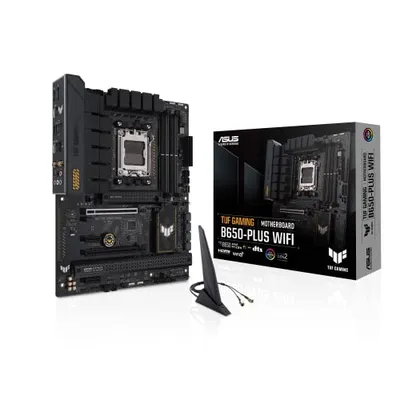
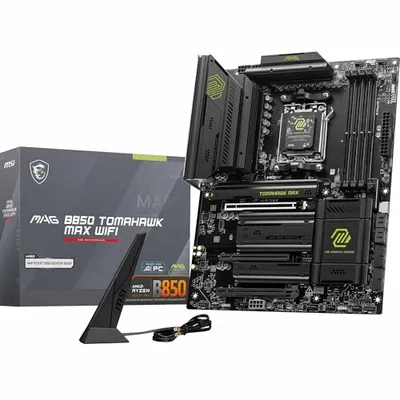
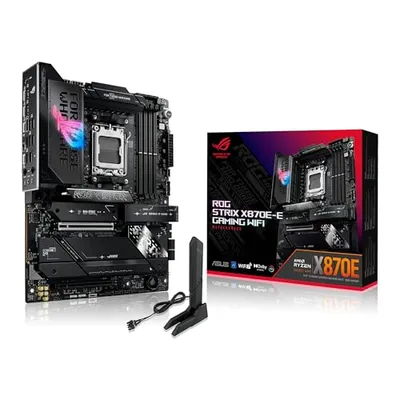
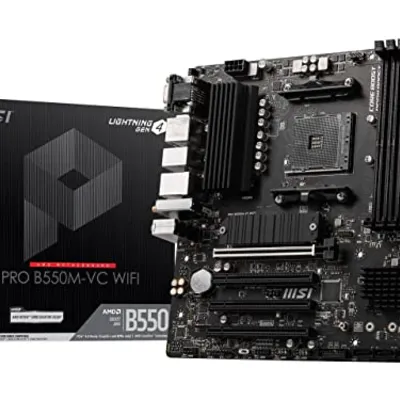
Integrating RAM modules with specific speeds into a system requires careful consideration of the motherboard's chipset capabilities and the CPU's integrated memory controller (IMC). Motherboards are typically rated to support a maximum RAM speed, and exceeding this limit may result in system instability or failure to boot. The IMC, residing within the CPU, dictates the supported memory types, channels, and maximum clock frequencies.
Overclocking, the practice of running RAM modules at frequencies higher than their officially rated specifications, is a common method to achieve enhanced performance. This process requires compatible hardware, adequate cooling, and precise configuration of timings and voltages within the system's BIOS/UEFI. Performance gains from RAM speed are most pronounced in CPU-bound tasks, memory-intensive applications like video editing and scientific simulations, and gaming scenarios where frame rates are sensitive to data fetching speeds.
Comparative Analysis of RAM Standards
The following table illustrates a simplified comparison of key RAM standards, highlighting their typical frequency ranges and theoretical peak bandwidth per channel for common configurations.
| Standard | Typical Frequency Range (MT/s) | Theoretical Peak Bandwidth (GB/s) per 64-bit Channel | Typical CAS Latency (CL) |
| DDR3 | 800 - 2133 | 6.4 - 17.07 | 7 - 11 |
| DDR4 | 2133 - 3200 (and higher with OC) | 17.07 - 25.6+ | 14 - 22 |
| DDR5 | 4800 - 7200 (and higher with OC) | 38.4 - 57.6+ | 30 - 40 |
Note: CAS Latency values are illustrative and can vary significantly based on specific module binning and manufacturer specifications. Higher MT/s generally offers higher bandwidth, but lower CAS Latency is crucial for responsiveness in certain workloads.
Future Outlook
The trajectory for RAM speed continues towards higher transfer rates and greater energy efficiency. Emerging standards like DDR6 are anticipated to push bandwidth capabilities further, potentially doubling that of DDR5. Architectural innovations, such as wider memory buses, on-package memory, and novel memory technologies like HBM (High Bandwidth Memory), are also crucial for meeting the ever-increasing data demands of AI accelerators, high-performance computing clusters, and advanced networking infrastructure. The interplay between memory speed, latency, and system architecture will remain a pivotal factor in unlocking next-generation computational performance.