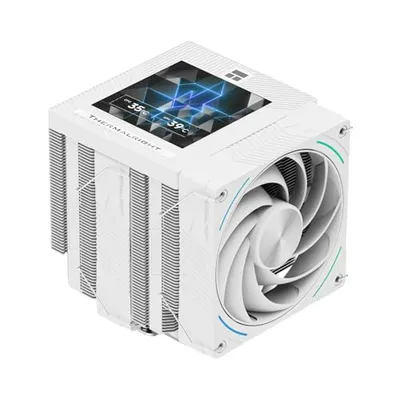
The 'Number of Heat Pipes' is a critical design parameter and a primary performance determinant in passive thermal management systems, particularly those employing heat pipes. It quantifies the total count of individual heat transfer elements integrated within a thermal solution. Each heat pipe operates on a phase-change principle, utilizing a working fluid that evaporates at a high-temperature interface (evaporator section) and condenses at a low-temperature interface (condenser section), thereby transporting thermal energy via latent heat of vaporization and condensation. The aggregate thermal transport capacity of a system is a function of the thermal conductivity of the working fluid, the internal geometry of the heat pipe (diameter, length, wick structure), and, crucially, the number of such units employed in parallel or series configurations. Increasing the number of heat pipes generally enhances the overall thermal conductance of the heat sink or thermal interface, enabling greater heat dissipation rates for a given temperature difference.
The selection of an optimal 'Number of Heat Pipes' is not merely additive; it involves complex thermal engineering considerations that balance performance enhancement against volumetric constraints, cost, and potential flow interference. In applications such as high-performance computing CPUs, GPUs, and industrial electronics, thermal designers must determine the precise quantity of heat pipes necessary to meet stringent operating temperature limits under maximum power dissipation scenarios. This involves detailed thermal modeling, often employing Computational Fluid Dynamics (CFD) and Finite Element Analysis (FEA), to simulate heat flow paths, temperature distributions, and vapor flow dynamics within the heat pipes. Factors like the thermal resistance of the evaporator and condenser sections, the wick's capillary limit, and the sonic and entrainment limits of the working fluid all influence how effectively additional heat pipes contribute to overall cooling efficiency. Inadequate heat pipe count can lead to thermal throttling and reduced device longevity, while an excessive number may introduce diminishing returns in performance gains, increased manufacturing complexity, and unnecessary weight or volume.
Mechanism of Operation and Thermal Transport
Heat pipes function as highly efficient, passive, two-phase heat transfer devices. The fundamental principle relies on the evaporation and condensation cycle of a working fluid contained within a sealed, evacuated envelope. Heat applied to the evaporator section vaporizes the working fluid. This vapor, at a slightly higher pressure, travels rapidly along the vapor core to the cooler condenser section. There, the vapor condenses back into a liquid, releasing its latent heat of vaporization to the external heat sink or environment. The liquid then returns to the evaporator section via capillary action through a porous wick structure lining the inner wall of the heat pipe, completing the cycle. The 'Number of Heat Pipes' directly scales the total surface area available for evaporation and condensation and increases the parallel pathways for vapor transport, thereby augmenting the system's thermal conductance (K), often expressed as Watts per Kelvin (W/K). A greater number of heat pipes can effectively reduce the thermal resistance (Rth) between the heat source and the heat sink, as Rth is inversely proportional to the total thermal conductance of the heat transfer elements.
Industry Standards and Design Considerations
While there are no universal, codified 'Number of Heat Pipes' standards across all industries, specific application domains and manufacturers adhere to de facto or proprietary design guidelines. For instance, in consumer electronics thermal solutions, CPU cooler manufacturers often specify the number of heat pipes as a key performance indicator. Specifications may range from 1 to 6 or more heat pipes, typically of 6mm or 8mm diameter. The material of the heat pipe (e.g., copper for the envelope and wick, aluminum for compatibility) and the choice of working fluid (e.g., deionized water, methanol, ammonia, depending on operating temperature range) are critical factors that interact with the number of pipes. Standards like those governing thermal interface materials (TIMs) indirectly influence heat pipe effectiveness by dictating the quality of thermal contact at the evaporator and condenser interfaces. The geometry of the heat pipes (straight, bent, flattened) also plays a role, with flattened heat pipes offering greater contact area but potentially reduced vapor flow cross-section.
Evolution and Performance Metrics
The evolution of thermal management has seen a progressive increase in the number and sophistication of heat pipes employed in demanding applications. Early thermal solutions relied primarily on solid conduction and natural convection. The advent of heat pipes offered a significant leap in passive heat transport capability. Over time, advancements in manufacturing techniques have allowed for more precise control over wick structures (e.g., sintered, grooved, mesh) and working fluid purity, thereby increasing individual heat pipe performance and enabling the effective utilization of a higher number of pipes. Performance is typically quantified by measuring the overall thermal resistance of the heat sink assembly. This is achieved through experimental testing under controlled conditions, where the heat input (Q), the temperature of the heat source (Tsource), and the temperature of the heat sink's ambient interface (Tambient) are measured. The thermal resistance (Rth) is then calculated as (Tsource - Tambient) / Q. Lower Rth values indicate superior thermal performance, which is directly influenced by the number and efficacy of the integrated heat pipes.
Factors Influencing Optimal Quantity
- Thermal Load (Heat Dissipation Requirement)
- Available Volume and Space Constraints
- Temperature Limits of the Device
- Cost and Manufacturing Complexity
- Wick Structure and Capillary Limit
- Working Fluid Properties and Operating Temperature Range
- Vapor Flow Dynamics and Potential Blockages
- Interface Thermal Resistance (Source to Evaporator, Condenser to Ambient)
Applications
The 'Number of Heat Pipes' is a fundamental specification across a wide spectrum of thermal management applications:
- High-Performance Computing: CPU and GPU coolers, server thermal solutions.
- Consumer Electronics: Laptops, gaming consoles, high-end smartphones.
- Industrial Equipment: Power supplies, LED lighting, telecommunications hardware.
- Aerospace and Defense: Avionics cooling, satellite thermal control.
- Automotive: Engine control units (ECUs), advanced driver-assistance systems (ADAS).
Advantages and Disadvantages
| Advantages | Disadvantages |
|---|---|
| Enhanced Thermal Transport Capacity | Increased Cost and Manufacturing Complexity |
| Reduced Thermal Resistance | Increased Volume and Weight |
| Passive Operation (No external power required) | Potential for Diminishing Returns with Excessive Quantity |
| Scalability for Higher Heat Loads | Sensitivity to Orientation (Gravity can affect liquid return in some wick types) |
| Improved Device Reliability and Lifespan | Potential for Vapor Flow Interference or Blockage |
Architecture and Integration
The integration of multiple heat pipes into a thermal solution involves careful architectural design. Heat pipes are typically embedded within a base plate or cold plate, which interfaces with the heat-generating component. The condenser ends of the heat pipes are then usually spread out and attached to a fin stack (heat sink), maximizing the surface area for convective heat dissipation to the ambient air or a liquid coolant loop. Flattened heat pipes are often used to increase contact area with the heat source and fin stack, improving thermal transfer efficiency. The spacing and arrangement of heat pipes are optimized to ensure even heat distribution across the fins and to minimize vapor pressure drop along the pipes. Advanced designs may incorporate heat spreaders that aggregate heat from a source and distribute it uniformly to multiple heat pipes.
Alternatives and Future Outlook
While heat pipes are a dominant technology, alternatives exist, including vapor chambers (which are essentially two-dimensional heat pipes), thermoelectric coolers (TECs), and advanced liquid cooling solutions. Vapor chambers offer superior heat spreading capabilities over larger areas but can be more complex to manufacture. TECs provide active cooling but require electrical power and generate waste heat. Liquid cooling offers very high thermal performance but is more complex, requires pumps, and carries a risk of leakage. The future outlook for heat pipes involves further integration with advanced materials (e.g., carbon nanotubes for enhanced wick performance), optimization through sophisticated simulation tools, and potential hybridization with other cooling technologies to address ever-increasing thermal densities in electronic devices. The 'Number of Heat Pipes' will remain a crucial, albeit evolving, parameter in the design of these advanced thermal management systems.