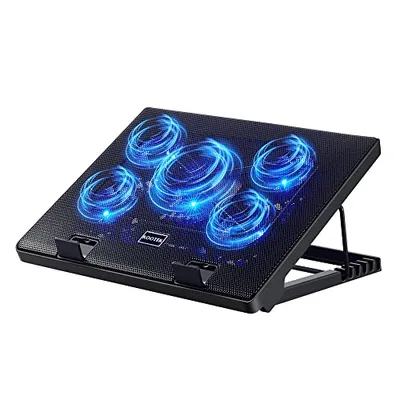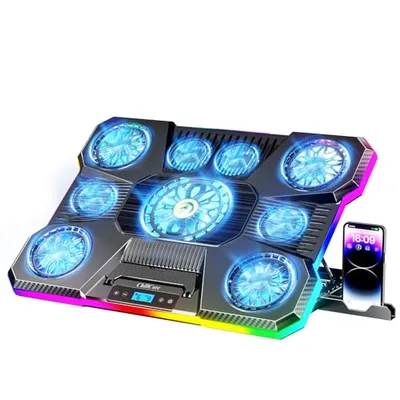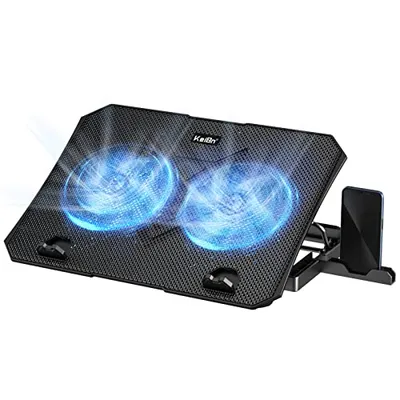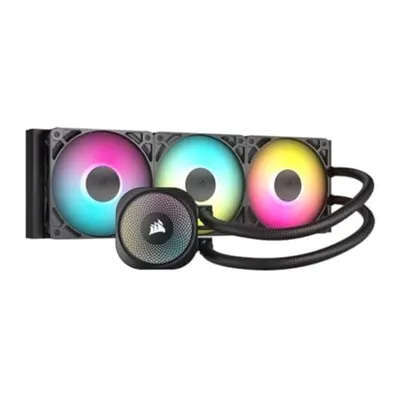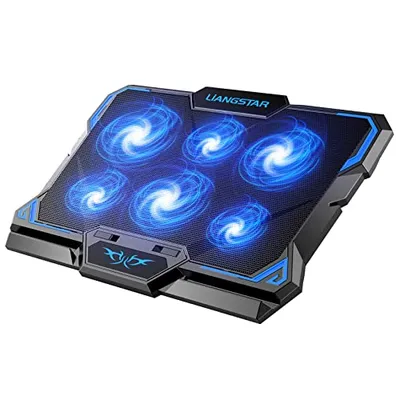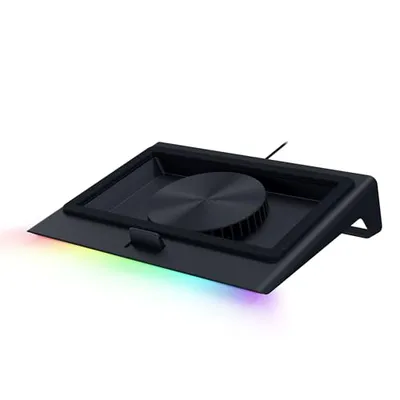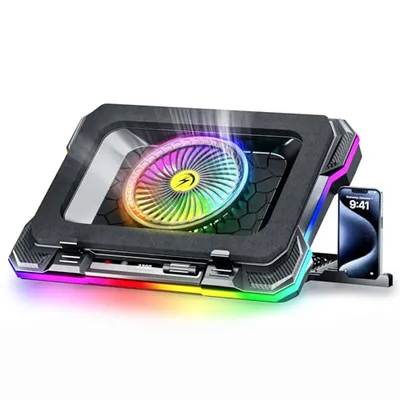
The 'Number of fans' designation quantifies the count of individual rotating impeller devices employed within a thermal management subsystem. Each fan unit, typically comprising a motor and aerodynamic blades, is engineered to induce and direct airflow across heat-generating components or through enclosed volumes. This metric is fundamental to characterizing the convective heat transfer capability and acoustic profile of a system, directly influencing its operational temperature ceilings and environmental impact. Variations in fan quantity are dictated by thermal load density, acceptable noise levels, power consumption constraints, and the geometric configuration of the enclosure or chassis.
In the context of computing hardware, industrial machinery, and automotive systems, the number of fans is a critical design parameter that correlates with the system's thermal dissipation strategy. For instance, high-performance server racks often incorporate multiple high-velocity fans to manage dense arrays of heat-producing processors and memory modules, while consumer electronics might utilize a single, lower-speed fan or even passive cooling solutions depending on the power envelope. The specification of fan count is integral to thermal design power (TDP) calculations, airflow volume (CFM - cubic feet per minute), and static pressure considerations, all of which are essential for ensuring reliable operation and longevity of sensitive electronic or mechanical components.
Mechanism of Action
Fans operate on the principle of converting rotational mechanical energy into kinetic energy of air molecules. An electric motor, typically a brushless DC (BLDC) motor for efficiency and longevity, drives a rotor to which blades are attached. These blades are aerodynamically shaped to impart momentum to the air, creating a pressure differential that results in bulk airflow. The direction and velocity of this airflow are determined by the blade pitch, shape, rotational speed (RPM), and the overall fan housing design. Different fan types, such as axial and centrifugal (blower) fans, generate distinct airflow patterns and pressure characteristics suited for specific cooling applications. Axial fans move air parallel to their rotational axis, ideal for high volume, low-pressure applications like general chassis cooling. Centrifugal fans draw air radially and expel it at higher pressure, suitable for directing airflow through restrictive components or ducts.
Applications and Significance
The 'Number of fans' is a primary consideration across numerous technological domains:
- Computer Systems: Essential for cooling CPUs, GPUs, power supplies, chipsets, and entire chassis to prevent thermal throttling and hardware failure. Server environments often deploy redundant fan configurations for reliability.
- Automotive Industry: Radiator fans, cabin ventilation fans, and cooling fans for electronic control units (ECUs) maintain optimal operating temperatures.
- Industrial Equipment: Cooling of control cabinets, power electronics (e.g., variable frequency drives), and machinery enclosures in manufacturing settings.
- Consumer Electronics: Laptops, gaming consoles, and home appliances utilize fans to manage heat generated by processors, displays, and power components.
- Data Centers: Critical for maintaining ambient temperature within racks, directly impacting server performance and lifespan.
Industry Standards and Metrics
While there isn't a universal standard dictating the precise number of fans for all devices, several industry-related metrics and standards influence fan selection and system design:
Airflow Measurement
- CFM (Cubic Feet per Minute): Measures the volume of air a fan can move. Higher CFM generally indicates greater cooling potential but can also correlate with increased noise.
- CMM (Cubic Meters per Hour): The metric equivalent of CFM in the metric system.
Pressure Measurement
- Static Pressure (mmH2O or Pa): Indicates the fan's ability to push air against resistance, such as through heatsinks, filters, or narrow ducts. Crucial for applications where airflow path is restricted.
Noise Levels
- dBA (Decibels, A-weighted): Measures the perceived loudness of the fan's operation. Lower dBA is desirable, especially in consumer-facing or office environments.
Power Consumption
- Watts (W): Indicates the electrical power drawn by the fan motor, impacting overall system energy efficiency.
Reliability and Lifespan
- MTBF (Mean Time Between Failures): A statistical measure of fan reliability, often specified in hours.
Evolution and Trends
Historically, early computing devices employed minimal or no active cooling. The advent of increasingly powerful and dense electronic components necessitated the integration of fans. Early designs were often bulky and noisy. Technological advancements have led to more efficient motor designs (e.g., improvements in BLDC technology), optimized blade aerodynamics for reduced noise and increased airflow, and miniaturization allowing for more fans within constrained form factors. The trend is towards quieter, more energy-efficient fans, often with variable speed control (PWM - Pulse Width Modulation) that adjusts RPM based on real-time temperature sensor feedback, optimizing performance while minimizing power draw and acoustic output. Smart cooling systems also integrate multiple fans into coordinated control loops.
Practical Implementation and Considerations
Implementing cooling solutions based on the number of fans involves several engineering considerations:
Airflow Path Design
The strategic placement and orientation of fans are paramount. A well-designed system establishes a clear airflow path (e.g., front-to-back, bottom-to-top) to ensure effective heat removal from all critical components without creating turbulent dead spots. The interplay between intake and exhaust fans is crucial for maintaining positive, negative, or neutral system pressure, which can affect dust ingress.
Fan Type Selection
Choosing between axial and centrifugal fans, or a combination thereof, depends on the specific cooling requirements and spatial constraints. High static pressure fans are necessary for dense heatsinks or filter-equipped enclosures.
Redundancy and Fault Tolerance
In critical applications like servers or industrial control systems, employing more fans than strictly necessary (N+1 redundancy) ensures continued operation even if one fan fails. System monitoring software can alert operators to fan malfunctions.
Acoustic Engineering
Fan noise is a significant factor in user experience. Techniques like employing larger fans rotating at lower speeds, using fluid dynamic bearings, and designing blade shapes to minimize turbulence are employed to reduce acoustic emissions.
Performance Metrics
The effectiveness of a cooling system is evaluated through several key performance indicators:
Component Temperatures
Direct measurement of the operating temperatures of critical components (CPU, GPU, etc.) under various load conditions. Thermal imaging cameras can provide a visual representation of heat distribution.
System Ambient Temperature
The average temperature of the air within the enclosure. Lower ambient temperatures contribute to better overall component cooling.
Airflow Velocity and Distribution
Measurements using anemometers to verify that sufficient airflow reaches all heat-generating sources.
Acoustic Output
Objective measurements of sound pressure levels (dBA) at specified distances from the device.
Power Efficiency
The ratio of heat dissipated to power consumed by the cooling system.
Pros and Cons
Pros:
- Effective Heat Dissipation: Provides active cooling, essential for high-power components.
- Scalability: Increasing the number of fans or their speed can augment cooling capacity.
- Component Longevity: Prevents overheating, extending the lifespan of hardware.
- Performance Stability: Mitigates thermal throttling, ensuring consistent performance.
Cons:
- Noise Generation: Fans are a primary source of acoustic emissions.
- Power Consumption: Fans draw electrical power, impacting overall energy efficiency.
- Dust Accumulation: Moving air can draw dust into enclosures, requiring regular cleaning or filtration.
- Mechanical Failure: Fans are mechanical components subject to wear and eventual failure.
- Cost: Multiple fans and sophisticated control systems add to the overall system cost.
| Configuration | Number of Fans | Primary Airflow | Typical CFM (per fan) | Static Pressure Capability | Noise Level (dBA) | Primary Use Case |
| Low Density | 2 (Rear Exhaust) | Front-to-Back | 40-60 | Low | 25-35 | Low TDP components, basic servers |
| Medium Density | 4 (2 Front Intake, 2 Rear Exhaust) | Front-to-Back | 60-80 | Medium | 35-45 | Standard rack servers, workstations |
| High Density | 6-8 (Multiple Front/Rear/Top) | Optimized Multi-Path | 80-120+ | High | 45-55+ | High-performance computing, dense storage servers |
| Redundant | N+1 Configuration (e.g., 5 fans for 4 slots) | Front-to-Back | 70-90 | Medium | 40-50 | Mission-critical servers requiring uptime |
Future Outlook
The future of fan technology in thermal management leans towards enhanced efficiency, reduced noise, and intelligent control. Innovations in blade design, material science for quieter operation, and more sophisticated fan control algorithms utilizing AI for predictive cooling will likely become more prevalent. Integration with advanced heat sinks, vapor chambers, and liquid cooling solutions will continue to evolve, potentially reducing reliance on high fan counts in some applications while increasing the need for precise airflow management in others. The overarching goal remains maximizing thermal dissipation within increasingly stringent power and acoustic envelopes.