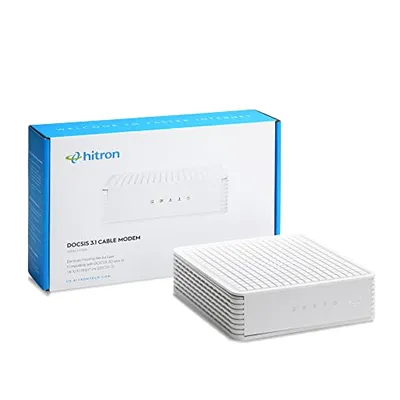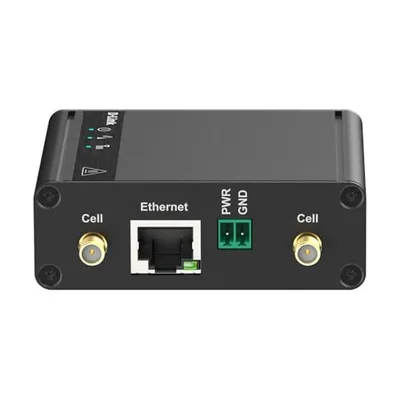
Modem performance quantifies the efficacy and efficiency with which a modem (modulator-demodulator) transmits and receives digital data over an analog transmission medium, such as telephone lines, coaxial cables, or radio frequencies. It is a multi-faceted metric encompassing several critical parameters that dictate the quality, speed, and reliability of data communication. Key indicators include data throughput (maximum achievable data transfer rate, typically measured in bits per second or bps), latency (the time delay in data packet transmission), jitter (variation in latency), signal-to-noise ratio (SNR, a measure of signal strength relative to background noise), and error rate (the frequency of data corruption during transmission). The underlying physical layer protocols, modulation schemes (e.g., QAM, PSK), error correction techniques, and the physical characteristics of the transmission medium profoundly influence these performance aspects.
Understanding modem performance is crucial for network design, troubleshooting, and end-user experience optimization. For instance, high throughput is essential for bandwidth-intensive applications like high-definition video streaming and large file transfers, while low latency is paramount for real-time applications such as online gaming and Voice over IP (VoIP) services. Similarly, a high SNR and low error rate are fundamental for maintaining data integrity, especially in noisy or degraded communication channels. Performance is often benchmarked against established industry standards and is subject to limitations imposed by hardware capabilities, the quality of the communication infrastructure, and environmental factors. Advanced diagnostic tools and testing methodologies are employed to accurately assess and compare modem performance across different operating conditions and hardware configurations.
Mechanism of Action and Underlying Principles
Modem performance is intrinsically linked to the physical layer mechanisms employed for signal conversion and transmission. The modulation process encodes digital data bits into analog signals suitable for transmission over a given medium. The choice of modulation scheme significantly impacts performance; for example, Quadrature Amplitude Modulation (QAM) allows for higher data rates by encoding multiple bits per symbol, but it is more susceptible to noise than simpler schemes like Phase-Shift Keying (PSK). Demodulation, conversely, reconstructs the original digital data from the received analog signal. The fidelity of these processes directly affects the error rate and maximum achievable throughput.
Noise, interference, and signal attenuation are pervasive challenges that degrade modem performance. Noise, a random fluctuation in signal amplitude, can corrupt symbols, leading to bit errors. Interference arises from external signals operating on similar frequencies or within the same medium. Attenuation is the gradual loss of signal strength over distance, requiring amplification which can also introduce noise. Modem performance metrics are thus a direct reflection of how effectively a device can overcome these impairments. Techniques like Forward Error Correction (FEC) add redundant data to transmitted symbols, enabling the receiver to detect and correct a certain number of errors without retransmission, thereby improving reliability at the cost of slightly reduced effective throughput.
Industry Standards and Evolution
The performance of modems is heavily dictated by adherence to a complex web of international and regional standards established by bodies such as the International Telecommunication Union (ITU), Institute of Electrical and Electronics Engineers (IEEE), and various cable and DSL forums. These standards define specific modulation techniques, data rates, protocols, and test procedures to ensure interoperability and baseline performance levels.
Key Standards Organizations and Their Contributions
- ITU-T (International Telecommunication Union - Telecommunication Standardization Sector): Defines standards for digital subscriber line (DSL) modems (e.g., G.992 series for ADSL/ADSL2/ADSL2+), V-series modems for dial-up and basic analog lines, and standards for fiber optic modems.
- IEEE (Institute of Electrical and Electronics Engineers): Primarily responsible for Ethernet and Wi-Fi standards, which dictate the performance of modems connecting to local area networks (LANs) and wireless networks (e.g., 802.3 for Ethernet, 802.11 for Wi-Fi).
- CableLabs: Develops specifications for cable modems, including DOCSIS (Data Over Cable Service Interface Specification) versions, which are critical for broadband internet access over coaxial cable networks.
Historical Trajectory of Modem Performance
The evolution of modem performance is characterized by exponential increases in data rates and significant reductions in error rates, driven by advancements in digital signal processing (DSP), semiconductor technology, and coding theory. Early modems in the 1960s operated at speeds as low as 300 bps. The subsequent development of more sophisticated modulation schemes like QAM, coupled with innovations in error detection and correction, propelled speeds to kilobits per second (kbps) in the 1980s and 1990s. The advent of DSL and cable technologies in the late 1990s and early 2000s ushered in the megabits per second (Mbps) era. Current generations of DOCSIS and VDSL/G.fast technologies push performance into the multi-gigabits per second (Gbps) range, leveraging advanced spectral efficiency techniques and wider channel bandwidths.
Performance Metrics and Measurement
Quantifying modem performance involves a suite of metrics that provide a comprehensive view of its operational capabilities. These metrics are essential for comparing different devices, diagnosing issues, and ensuring compliance with service level agreements (SLAs).
Primary Performance Indicators
- Throughput (Data Rate): The actual rate at which data is successfully transferred, measured in bits per second (bps). This is often distinguished between upstream (upload) and downstream (download) speeds.
- Latency: The time delay for a data packet to travel from source to destination. Crucial for interactive applications. Measured in milliseconds (ms).
- Jitter: The variation in packet delay over time. High jitter can disrupt real-time streams. Measured in milliseconds (ms).
- Packet Loss Rate: The percentage of data packets that are lost during transmission. A direct indicator of unreliability.
- Signal-to-Noise Ratio (SNR): The ratio of signal power to noise power. A higher SNR generally correlates with lower error rates and higher achievable data rates. Measured in decibels (dB).
- Error Rate (Bit Error Rate - BER): The proportion of bits that are incorrectly received compared to the total number of bits transmitted.
Testing Methodologies and Tools
Performance is typically evaluated using specialized network testing equipment, software simulators, and standardized diagnostic interfaces provided by modems (e.g., SNMP, web-based GUIs). Throughput is often measured using tools like iPerf or Speedtest.net, which generate traffic and analyze received data. Latency and jitter are commonly assessed using the ping utility (ICMP echo requests) or more advanced network analysis tools. SNR and error rates are often accessible through the modem's diagnostic interface or via specialized spectrum analyzers and signal generators for laboratory testing.
| Technology | Standard | Typical Downstream Throughput | Typical Upstream Throughput | Typical Latency | Primary Medium |
| DSL | ADSL2+ (G.992.5) | Up to 24 Mbps | Up to 3.3 Mbps | 20-100 ms | Twisted-pair copper telephone line |
| DSL | VDSL2 (G.993.2) | Up to 100 Mbps | Up to 100 Mbps | 10-30 ms | Twisted-pair copper telephone line |
| Cable | DOCSIS 3.0 | Up to 1 Gbps | Up to 200 Mbps | 10-50 ms | Coaxial cable |
| Cable | DOCSIS 3.1 | Up to 10 Gbps | Up to 1 Gbps | 5-20 ms | Coaxial cable |
| Fiber (ONT) | GPON/EPON | 1 Gbps to 10 Gbps | 1 Gbps to 10 Gbps | 1-10 ms | Optical fiber |
Factors Affecting Modem Performance
Several external and internal factors can significantly influence the observed performance of a modem, often necessitating careful consideration during installation, operation, and troubleshooting.
Environmental and Infrastructure Factors
- Line Quality: The physical condition of the transmission medium (e.g., copper wires, coaxial cables) is paramount. Degradation due to age, corrosion, moisture, or physical damage directly impairs signal integrity, reducing SNR and increasing error rates.
- Distance: Signal attenuation increases with distance from the network's central office or node. This limits the effective range and maximum achievable data rates, particularly for DSL technologies.
- Interference: Electromagnetic interference (EMI) from electrical appliances, other communication lines, or radio frequency sources can corrupt analog signals. Proper shielding and physical separation are critical.
- Crosstalk: In multi-pair or multi-cable systems (like telephone exchanges or cable distribution networks), signals from adjacent lines can induce interference, known as crosstalk. Advanced DSL standards employ techniques like vectoring to mitigate this.
- Network Congestion: While not directly a modem hardware issue, congestion at intermediate network points (e.g., ISP network, data centers) can artificially limit perceived throughput, even if the modem itself is performing optimally.
Hardware and Configuration Factors
- Modem Hardware Capabilities: The chipset, processing power, and design of the modem itself set inherent limits on achievable speeds and processing complex modulation schemes. Older or lower-tier modems may not support the latest standards or highest data rates.
- Firmware and Drivers: Outdated or buggy firmware/drivers can lead to suboptimal performance, instability, or connectivity issues. Regular updates are often recommended.
- Configuration Settings: Incorrectly configured Quality of Service (QoS) settings, MTU sizes, or other network parameters can indirectly affect performance for specific applications.
- Power Supply: An unstable or inadequate power supply can cause erratic modem behavior and performance degradation.
Advanced Performance Considerations
Beyond basic throughput and latency, advanced aspects of modem performance are critical for high-demand applications and robust network operation. These include the modem's ability to dynamically adapt to changing line conditions and its efficiency in utilizing available spectrum.
Adaptive Modulation and Bandwidth Management
Modern modems, particularly those employing DSL and cable technologies, utilize adaptive modulation techniques. The modem continuously monitors line conditions (SNR, attenuation) and dynamically adjusts the modulation scheme and symbol rate to maximize throughput while maintaining a target error rate. For instance, in noisy conditions, it might switch from a higher-order QAM to a lower-order QAM or even simpler modulation to ensure a stable connection. This adaptability is crucial for maintaining service during periods of varying line quality.
Spectral Efficiency and Channel Bonding
Spectral efficiency, measured in bits per second per Hertz (bps/Hz), indicates how effectively a modem utilizes the available frequency spectrum. Higher spectral efficiency allows for greater data rates within a given bandwidth. Advanced standards like DOCSIS 3.1 employ orthogonal frequency-division multiplexing (OFDM) and low-density parity-check (LDPC) codes to achieve significantly higher spectral efficiency compared to previous generations. Channel bonding, prevalent in DOCSIS, aggregates multiple communication channels to increase the total available bandwidth and thus the maximum throughput.
Quality of Service (QoS) and Prioritization
While often managed at higher network layers, modem hardware can contribute to Quality of Service (QoS) by implementing mechanisms that prioritize certain types of traffic. For instance, a modem might be configured to give preferential treatment to VoIP packets over file transfer data, ensuring better call quality even under heavy network load. This requires the modem to be capable of traffic classification and queuing management at the packet level.
Alternatives and Future Trends
The landscape of data transmission is continually evolving, with advancements in fiber optics and wireless technologies presenting alternatives and future directions for high-performance connectivity that may reduce or supersede traditional modem technologies in certain contexts.
Fiber Optic Solutions (ONTs)
Optical Network Terminals (ONTs), commonly used in Fiber-to-the-Home (FTTH) deployments, are the direct optical equivalent of modems. They terminate the optical fiber line and convert optical signals to electrical signals for Ethernet or other network interfaces. ONTs generally offer significantly higher symmetrical bandwidth, lower latency, and greater immunity to electromagnetic interference compared to traditional modems, representing the current apex of broadband performance.
Wireless Technologies
Emerging wireless standards, including 5G and future iterations, are increasingly capable of delivering high-speed internet access that can rival or exceed wired connections for many users. Fixed Wireless Access (FWA) solutions leverage cellular infrastructure to provide broadband to homes and businesses. While offering flexibility and rapid deployment, wireless performance is inherently susceptible to environmental factors, spectrum availability, and network congestion in a shared medium.
Integrated Access Devices (IADs) and Gateways
Many modern internet service packages bundle modem functionality with routing, Wi-Fi, and even voice termination into a single device, often called an Integrated Access Device (IAD) or a residential gateway. These devices integrate the modem's role but offer a broader feature set for home networking. Performance assessment in such devices must consider the combined capabilities and potential bottlenecks across all integrated functions.