High-bandwidth Digital Content Protection (HDCP) is a proprietary digital transmission interface developed by Intel Corporation to prevent copying of digital audio and video content as it travels from a source device (e.g., Blu-ray player, gaming console, set-top box) to a display device (e.g., television, monitor, projector). It operates at the protocol layer, embedding encryption and authentication mechanisms within the digital interface signaling, most commonly DisplayPort and HDMI, to ensure that only authorized devices can decode and present the protected content. The core objective is to maintain the integrity of the digital content chain by establishing a secure handshake between all components, thereby enforcing digital rights management (DRM) policies and preventing unauthorized duplication or redistribution.
The technical implementation of HDCP involves a complex series of cryptographic protocols and device authentication procedures. Source devices and display devices must possess unique encryption keys, typically burned into hardware during manufacturing. When connected, these devices engage in an authentication process where they exchange and verify these keys. Upon successful authentication, a session key is established, which is then used to encrypt the data stream transmitted between them. The protocol also incorporates mechanisms to detect and reject unauthorized repeaters or devices that do not adhere to the HDCP specifications, thereby creating a secure conduit for content delivery. Versions of HDCP have evolved to support increasing resolutions, refresh rates, and data types, including 3D content and high dynamic range (HDR) video.
HDCP Architecture and Mechanism
The HDCP architecture is built upon a hierarchical system of authentication and encryption. Each HDCP-compliant device contains a set of unique Device Private Keys (DPKs) and a common Device Public Key (DPK_common) for use during the initial handshake. The authentication process, known as the 'System Authentication' phase, involves the following steps:
- Key Exchange: The source device initiates a request to authenticate the display device.
- Public Key Verification: The source device sends a unique value (R_S) to the display, which encrypts it using its private key and returns it. The source then uses the display's public key (DPK_common) to decrypt the response, verifying the display's identity. A similar process occurs in reverse for the display to authenticate the source.
- Session Key Generation: Upon successful mutual authentication, a shared secret, the Session Key (K_S), is generated. This key is unique for each connection and is derived through a series of cryptographic operations involving the authenticated devices' keys and challenge values.
- Content Encryption: All digital audio and video data transmitted over the interface is then encrypted using K_S. The encryption algorithm employed is typically a variant of DES or AES, depending on the HDCP version.
HDCP also manages a 'Repeater Authentication' process, which is critical for systems involving intermediate devices like audio-video receivers (AVRs) or splitters. These repeaters must also authenticate themselves to the source device and then authenticate each component connected to their output ports. This ensures that the entire content protection chain remains unbroken.
HDCP Versions and Evolution
HDCP has undergone several revisions to accommodate advancements in digital display technology and to strengthen its protection mechanisms against emerging circumvention techniques. Each version introduced improvements in encryption strength, supported resolutions, and signaling protocols.
HDCP 1.x
The initial versions, HDCP 1.0 through 1.4, primarily supported resolutions up to 1080p and introduced the foundational authentication and encryption protocols. HDCP 1.4, released in 2009, improved robustness and added support for 4K resolutions at lower refresh rates (e.g., 30Hz) and 3D video formats.
HDCP 2.x
HDCP 2.0, released in 2010, represented a significant overhaul, moving from the older DES/AES-based encryption to a more robust suite of cryptographic algorithms, including AES-128 and SHA-1, and introducing a new key exchange protocol based on the Fast-DH (Diffie-Hellman) key exchange. This version was designed to address the increasing bandwidth requirements of higher resolutions like 4K and the need for stronger protection against piracy. HDCP 2.1 and 2.2 further refined these protocols, enhancing security and expanding compatibility. HDCP 2.2, the most prevalent version prior to the latest iterations, is mandatory for 4K Ultra HD Blu-ray playback and 4K streaming content.
HDCP 2.3
The latest iteration, HDCP 2.3, released in 2018, aims to further enhance security and interoperability. It introduces improvements in how encryption keys are managed and transmitted, aiming to reduce the attack surface and improve the efficiency of the authentication process. Key features include authenticated message encryption and a revised revocation mechanism.
Industry Standards and Compliance
HDCP is an integral part of the digital interface standards, notably HDMI and DisplayPort. For a device to be considered HDCP compliant, it must implement the specified protocols and pass rigorous compliance testing administered by the Digital Content Protection LLC (DCP), a wholly-owned subsidiary of Intel.
HDMI and HDCP
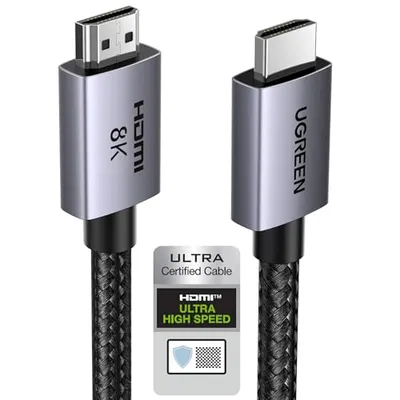
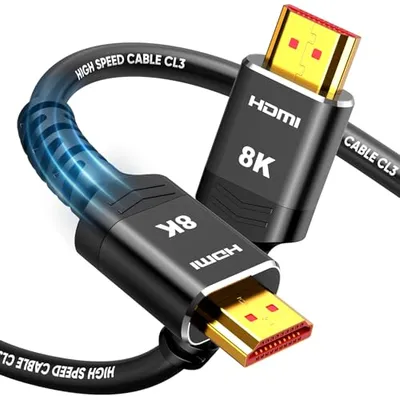
HDMI (High-Definition Multimedia Interface) is the dominant digital interface for consumer electronics. HDCP is typically integrated as an optional feature within the HDMI specification. For protected content to be transmitted, both the source device and the display device must support the same version of HDCP. If a mismatch occurs, or if either device is not HDCP compliant, the content may be downscaled, displayed with artifacts, or not displayed at all.
DisplayPort and HDCP
DisplayPort is another widely used digital interface, particularly prevalent in computing and professional environments. Like HDMI, DisplayPort specifications incorporate support for HDCP. The implementation details and version compatibility requirements are analogous to those in HDMI, ensuring secure transmission of high-resolution video content.
Compliance Testing
DCP mandates strict compliance testing for all devices claiming HDCP compatibility. This testing ensures that the implemented HDCP protocols meet the specified security requirements and are robust against common circumvention methods. Devices must obtain a HDCP Compliance Test Certificate to be legally marketed as compliant.
Practical Implementation and Considerations
Implementing HDCP requires careful design and manufacturing processes. Chipsets that handle digital content transmission must incorporate dedicated HDCP logic and adhere to the specifications laid out by DCP.
Key Management
The secure management of cryptographic keys is paramount to HDCP's effectiveness. Device Private Keys (DPKs) are unique to each manufactured unit and are provisioned during the manufacturing process. These keys are considered highly sensitive and are typically protected by secure hardware modules within the chipset. The generation and management of session keys are handled dynamically for each connection, ensuring that even if one session's key is compromised, it does not affect other connections or past transmissions.
Repeater Devices
The inclusion of repeater devices in the content chain adds complexity. These devices, such as AV receivers, HDMI splitters, or matrix switchers, must correctly manage the HDCP authentication flow. A repeater must authenticate to the source device and then re-authenticate each downstream device. Incorrect implementation by a repeater can disrupt the content protection chain, leading to playback failures. The latest HDCP specifications include provisions to identify and manage different types of repeaters.
Performance Metrics
While HDCP is designed to be a transparent security layer, its authentication and encryption processes can introduce minor overhead. The primary performance impact is usually observed during the initial handshake phase, which takes a fraction of a second. Once authentication is complete, the encryption/decryption process is designed to be highly efficient, typically leveraging dedicated hardware accelerators within the chipsets. This minimizes any perceivable latency or degradation in video or audio quality for standard resolutions and refresh rates. However, at extremely high bandwidths or with very complex processing chains, the overhead can become more noticeable, especially in older implementations or non-compliant devices.
| HDCP Version | Release Year | Max Resolution | Key Encryption Type | Primary Interface Support |
|---|---|---|---|---|
| HDCP 1.0-1.4 | 2003-2009 | 1080p (4K @ 30Hz in 1.4) | DES/AES | HDMI, DVI |
| HDCP 2.0-2.2 | 2010-2013 | 4K @ 60Hz (and higher in 2.2) | AES-128, Fast-DH | HDMI, DisplayPort |
| HDCP 2.3 | 2018 | 8K @ 60Hz, 4K @ 120Hz | AES-128, SHA-1, EKR (Encryption Key Request) | HDMI 2.1, DisplayPort 1.4+ |
Pros and Cons of HDCP
Pros
- Content Protection: Effectively prevents unauthorized copying and redistribution of high-value digital content, supporting the business models of content creators and distributors.
- Interoperability Standard: Establishes a widely adopted standard for secure digital content transmission across various devices and manufacturers.
- Evolving Security: Regular updates (versions) address new threats and support higher fidelity content formats.
Cons
- Interoperability Issues: Can sometimes cause compatibility problems between devices of different ages or manufacturers, leading to playback failures or reduced quality.
- Complexity: Implementation adds complexity and cost to device manufacturing.
- Circumvention Attempts: Despite its security, sophisticated methods for circumventing HDCP protection continue to emerge.
- Developer Overhead: Requires significant effort from hardware manufacturers to ensure compliance and pass testing.
Alternatives and Future Outlook
While HDCP is the de facto standard for protecting content over digital interfaces, other DRM technologies exist, often employed at the software or application layer. These include various forms of watermarking, digital fingerprinting, and software-based encryption. However, for preventing direct digital copying of high-bandwidth streams, hardware-based solutions like HDCP are considered more robust. Future developments may involve more integrated hardware/software DRM solutions, blockchain-based content verification, or shifts in content distribution models that rely less on strict transmission-level protection.