GPON (Gigabit Passive Optical Network) optical fiber standards delineate the technical specifications governing the deployment and operation of passive optical network infrastructure utilizing gigabit-level data transmission rates over optical fiber. These standards, primarily defined by the International Telecommunication Union Telecommunication Standardization Sector (ITU-T), specifically under the G.984 series recommendations, dictate the physical layer (PHY), transmission convergence (TC) layer, and management aspects necessary for efficient point-to-multipoint communication. They specify parameters such as wavelength allocation for upstream and downstream traffic, modulation schemes, framing structures, encryption protocols (e.g., AES), and Quality of Service (QoS) mechanisms, enabling high-bandwidth, cost-effective broadband access. The passive nature of the optical splitters in GPON networks significantly reduces the need for active electronic components in the field, thereby lowering operational and maintenance costs while enhancing network reliability.
The evolution and adherence to GPON optical fiber standards are critical for interoperability between equipment from different manufacturers and for ensuring predictable performance metrics such as maximum reach, data throughput, and latency. Key standards within the G.984 family include G.984.1 (General characteristics), G.984.2 (Physical layer specifications), G.984.3 (Framing structure, multi-layer protocol definition, and management), and G.984.4 (Management and control interface), among others. These specifications are foundational for delivering advanced services like high-definition video streaming, Voice over IP (VoIP), and high-speed internet access to residential and business subscribers, forming a cornerstone of modern fiber-to-the-home (FTTH) and fiber-to-the-building (FTTB) deployments globally.
Mechanism of Action and Architecture
GPON networks operate on a point-to-multipoint (P2MP) architecture where a single optical line terminal (OLT) located at the service provider's central office serves multiple optical network units (ONUs) or optical network terminals (ONTs) at the customer premises. The optical distribution network (ODN) interconnects the OLT and ONUs/ONTs using passive optical splitters, which divide the optical signal from the OLT to multiple ONUs/ONTs downstream and combine the signals from multiple ONUs/ONTs for the upstream path. This passive splitting eliminates the need for powered equipment between the OLT and the end-user, reducing capital and operational expenditures. Downstream transmission is a broadcast mechanism, where the OLT sends data to all connected ONUs/ONTs, and each ONU/ONT identifies and processes its own data based on specific identifiers. Upstream transmission utilizes a time-division multiple access (TDMA) scheme, where the OLT assigns specific time slots to each ONU/ONT to transmit data, preventing signal collisions and ensuring efficient bandwidth utilization. The standards define the precise timing and control mechanisms for this TDMA, including grants and acknowledgement frames.
Physical Layer Specifications
The physical layer is defined by ITU-T G.984.2, which specifies the optical characteristics of the transmitter and receiver. GPON typically operates in the 1490 nm wavelength for downstream transmission and 1310 nm for upstream transmission, allowing for simultaneous bidirectional communication (Wavelength Division Multiplexing - WDM). The standards also define different speed tiers, with the most common being 2.5 Gbps downstream and 1.25 Gbps upstream. Enhanced versions, such as XG-PON and XGS-PON, support higher symmetrical speeds of 10 Gbps. The optical budget, which dictates the maximum reach and the number of splits possible, is also a critical parameter defined by the standards. This budget accounts for signal loss due to fiber attenuation, connector losses, and splitter losses.
Transmission Convergence (TC) Layer
The TC layer, as detailed in ITU-T G.984.3, is responsible for the framing and multiplexing of data traffic from various higher-layer protocols (like Ethernet) into the GPON TDM structure. It defines the GEM (GPON Encapsulation Method) framing, which is more efficient than the older PPPoE framing used in BPON. GEM allows for dynamic bandwidth allocation and encapsulation of different traffic types, including Ethernet frames, TDM bit streams, and ATM cells. The TC layer also incorporates Quality of Service (QoS) mechanisms, allowing the OLT to prioritize traffic based on pre-configured policies. This is achieved through different Transmission Containers (TCONTs) and Allocation IDs (alloc-IDs), which manage bandwidth requests and grants for upstream traffic.
Industry Standards and Evolution
The primary standard for GPON is the ITU-T G.984 series. This series has undergone several revisions and extensions to improve performance and introduce new functionalities. The evolution from earlier PON standards like APON (ATM PON) and BPON (Broadband PON) to GPON represented a significant leap in bandwidth and efficiency. Subsequent developments have led to standards like XG-PON (10G-PON), which offers 10 Gbps downstream and 2.5 Gbps upstream, and XGS-PON (10G-Symmetric PON), providing symmetrical 10 Gbps speeds. Further advancements include NG-PON2, which uses multiple wavelengths and advanced modulation techniques to achieve even higher aggregate bandwidths. These standards ensure interoperability, allowing service providers to select equipment from various vendors, fostering competition and innovation.
Key ITU-T Recommendations
- G.984.1: General characteristics of a broadband optical access system with a higher rate (e.g., 2.5 Gbit/s downstream and 1.25 Gbit/s upstream)
- G.984.2: Physical layer specifications of a broadband optical access system with a higher rate
- G.984.3: Transmission convergence layer specifications of a broadband optical access system with a higher rate
- G.984.4: Management and control interface for GPONs
- G.984.5: Enhancements for Gigabit PON (G-PON)
- G.987 Series: For XG-PON (10 Gbit/s downstream, 2.5 Gbit/s upstream)
- G.9807.1: For XGS-PON (10 Gbit/s symmetric)
- G.989 Series: For NG-PON2
| Standard | Downstream Rate | Upstream Rate | Primary Use Case |
|---|---|---|---|
| GPON (G.984) | 2.5 Gbps | 1.25 Gbps | FTTH/FTTB Broadband Access |
| XG-PON (G.987) | 10 Gbps | 2.5 Gbps | Higher Bandwidth FTTH/FTTB, Business Services |
| XGS-PON (G.9807.1) | 10 Gbps | 10 Gbps | Symmetrical High-Bandwidth FTTH/FTTB, Enterprise Networks |
| NG-PON2 (G.989) | 40 Gbps (aggregate) | 40 Gbps (aggregate) | Ultra-high Capacity Access, 5G Fronthaul |
Practical Implementation and Performance Metrics
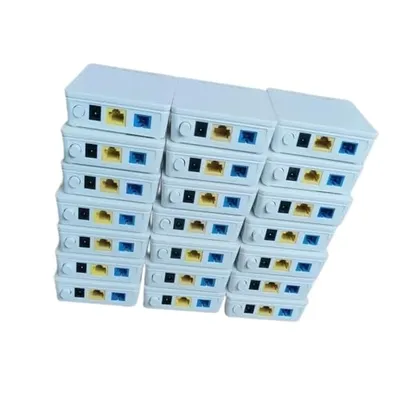
Implementing GPON optical fiber standards involves deploying OLT equipment at the service provider's premises and ONUs/ONTs at the customer locations, connected via an ODN composed of single-mode optical fiber and passive optical splitters. The design of the ODN is crucial, ensuring that the total optical loss does not exceed the system's optical budget. Factors such as splitter ratios (e.g., 1:32, 1:64, 1:128), fiber cable lengths (typically up to 20 km for standard GPON), and connector types influence the overall performance. Key performance metrics include maximum downstream and upstream throughput, latency (which is generally low due to the passive nature and efficient TDMA), jitter, and packet loss rate. The use of AES encryption ensures data security for all traffic transmitted over the fiber. Proper network planning, including fiber path management, power budget calculations, and ONU/ONT provisioning, is essential for a robust and reliable GPON deployment.
Quality of Service (QoS)
GPON standards incorporate sophisticated QoS mechanisms to ensure that different types of traffic receive appropriate treatment, crucial for supporting services like VoIP and video conferencing alongside best-effort internet traffic. The TC layer, through TCONTs and GEM Port IDs, allows for dynamic bandwidth allocation. Service providers can configure different TCONT types, such as Fixed, Assured, and Non-Assured, each with varying guarantees and priorities. This granular control enables the OLT to manage bandwidth efficiently, preventing congestion and ensuring that latency-sensitive applications meet their performance requirements.
Security
Security in GPON networks is primarily addressed through encryption. The ITU-T G.984.3 standard mandates AES (Advanced Encryption Standard) encryption for both downstream and upstream traffic. This encryption is performed at the TC layer, ensuring that data is protected from eavesdropping as it traverses the ODN. While encryption protects data in transit, securing the OLT and ONUs/ONTs themselves against unauthorized access and management is also a critical aspect of overall network security.
Pros and Cons
Advantages
- Cost-Effectiveness: The use of passive components in the ODN significantly reduces capital expenditure and operational costs compared to active networks.
- High Bandwidth Potential: GPON offers substantial bandwidth, enabling the delivery of triple-play services (voice, video, data) and supporting future bandwidth demands.
- Scalability: The P2MP architecture allows for efficient scaling to serve a large number of subscribers from a single OLT port.
- Efficiency: GEM framing and dynamic bandwidth allocation (DBA) ensure efficient utilization of network resources.
- Interoperability: Standardization ensures interoperability between equipment from different vendors.
- Long Reach: GPON can support distances of up to 20 km, and even further with enhancements.
Disadvantages
- Shared Bandwidth: In a passive split, the total downstream bandwidth is shared among all ONUs/ONTs connected to a splitter.
- Limited Upstream Speed (for base GPON): Standard GPON has a lower upstream speed (1.25 Gbps) than downstream (2.5 Gbps), which can be a limitation for symmetric bandwidth applications.
- ODN Complexity: The design and management of the ODN, particularly for large deployments, can be complex, requiring careful planning for fiber optic cabling and splicing.
- Distance Limitations: While 20 km is standard, exceeding this requires specialized equipment and can impact performance and optical budget.
- Interoperability Challenges: While standards exist, ensuring seamless interoperability between all components from different vendors can sometimes require extensive testing.
Alternatives to GPON
While GPON is a dominant standard for fiber access, several alternative technologies exist, each with its own advantages and target applications. EPON (Ethernet Passive Optical Network), based on IEEE 802.3ah standards, offers similar functionality but uses an Ethernet-based frame structure. It is often considered simpler to manage for Ethernet-centric networks. Active Ethernet (point-to-point Ethernet) provides dedicated fiber to each subscriber, offering guaranteed bandwidth and simpler troubleshooting but at a higher cost per subscriber due to the need for active equipment in the distribution network. Next-generation PON technologies, such as XG-PON, XGS-PON, and NG-PON2, represent evolutionary steps beyond GPON, offering higher speeds and greater capacity. Future PON standards, like 50G-PON and 100G-PON, are under development to meet the ever-increasing demand for bandwidth driven by applications like virtual reality, augmented reality, and advanced cloud services.