Download speed quantifies the rate at which data is transferred from a remote source, such as a server or network node, to a local device or client. It is fundamentally a measure of bandwidth utilization, typically expressed in units of bits per second (bps). Common metrics include kilobits per second (Kbps), megabits per second (Mbps), and gigabits per second (Gbps). This rate is contingent upon a multitude of factors, including the capacity of the transmission medium (e.g., optical fiber, copper wire, radio waves), the efficiency of network protocols (e.g., TCP/IP, HTTP), the processing capabilities of both the source and destination endpoints, and the congestion level of the intervening network infrastructure. In telecommunications and networking, download speed is a critical performance indicator, directly impacting user experience for activities like content streaming, file transfers, and real-time communication.
The physical and logical constraints dictating download speed are complex and often involve a bottleneck analysis. At the physical layer, signal integrity, attenuation, and interference can limit the maximum achievable data rate. At higher network layers, protocol overhead, packet loss requiring retransmissions, and buffer management policies introduce further limitations. For instance, in broadband access technologies like GPON (Gigabit Passive Optical Network), the aggregate bandwidth is shared among multiple subscribers, and the download speed experienced by an individual user is influenced by the aggregate throughput of the optical line terminal (OLT), the optical network unit (ONU), and the contention ratio with other users on the same passive optical splitter. Network topology, routing efficiency, and the server's upload capacity also play pivotal roles in determining the effective download speed attainable by a client.
Mechanism of Data Transfer
Download speed is a resultant metric derived from the successful transmission of data packets from a server to a client over a network. The process involves several stages, each with potential limitations. Firstly, data is segmented into packets at the source, each containing payload and header information. These packets traverse the network, guided by routing protocols, through various network devices such as routers and switches. At the destination, packets are reassembled into the original data stream. The speed at which this entire sequence occurs, from packet origination to successful reassembly and application processing, is what download speed measures. Key protocols like TCP (Transmission Control Protocol) employ flow control mechanisms (e.g., sliding windows) and congestion control algorithms (e.g., slow start, congestion avoidance) to manage the rate of data transmission, thereby influencing the effective download speed. The physical medium's capacity (e.g., channel bandwidth, signal-to-noise ratio) imposes an absolute upper bound, while protocol efficiency and network congestion determine how closely the actual speed approaches this theoretical maximum.
Factors Influencing Download Speed
Network Bandwidth
Network bandwidth represents the theoretical maximum data transfer rate of a communication channel. It is analogous to the width of a pipe, with a wider pipe allowing more water (data) to flow per unit of time. This is often advertised by Internet Service Providers (ISPs) as their service tier. However, the advertised bandwidth is typically the aggregate capacity, and the actual download speed experienced by an end-user is subject to shared usage, overhead, and other network impairments.
Latency
Latency, or network delay, is the time it takes for a data packet to travel from the source to the destination. High latency can significantly reduce perceived download speeds, especially for protocols that require acknowledgments for each packet or segment of data, such as TCP. Each round-trip time (RTT) adds to the overall delay, meaning that even with high bandwidth, the data transfer rate can be limited by the time taken for control signals to return.
Jitter
Jitter refers to the variation in latency over time. In real-time applications like video streaming or voice calls, consistent latency is crucial. High jitter can lead to packet loss or out-of-order delivery, forcing retransmissions or buffer adjustments that negatively impact the perceived download speed and quality of service.
Packet Loss
Packet loss occurs when one or more packets traversing the network fail to reach their destination. This can be due to network congestion, faulty hardware, or transmission errors. When packets are lost, higher-level protocols like TCP must detect this loss and retransmit the missing data, which directly reduces the effective download speed.
Server Throughput and Load
The download speed is also limited by the upload speed of the server providing the data and its current processing load. If a server cannot send data fast enough, or if it is overwhelmed with requests from multiple clients, the download speed for any individual client will be constrained, irrespective of the client's own connection capabilities.
Client Device Capabilities
The hardware and software on the client device also play a role. The network interface card (NIC), the processor's ability to handle data processing and encryption/decryption, and the efficiency of the operating system's network stack can all impose limitations on the maximum achievable download speed.
Industry Standards and Technologies
Broadband Access Technologies
GPON (Gigabit Passive Optical Network)
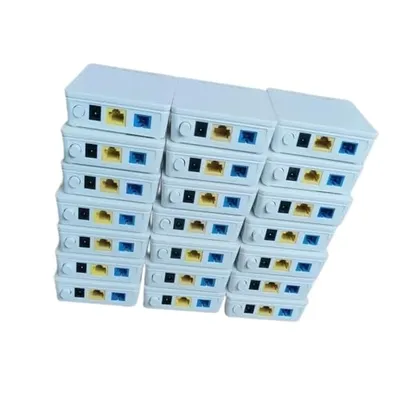
GPON is a fiber-optic access technology that provides high-speed internet connectivity. It utilizes a point-to-multipoint architecture where a single optical fiber from the OLT (Optical Line Terminal) is split to serve multiple ONUs (Optical Network Units) at subscriber premises. GPON offers a downstream aggregate bandwidth of up to 2.488 Gbps, which is shared among users connected to the same passive optical splitter. The actual download speed experienced by an end-user is a function of the total bandwidth, the number of active users, and the allocation mechanism (Time Division Multiplexing - TDM).
DOCSIS (Data Over Cable Service Interface Specification)
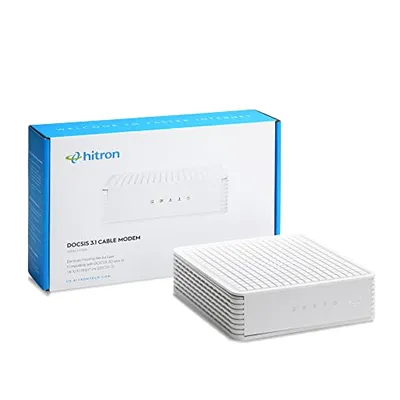
DOCSIS is a standard for high-speed data transmission over cable television infrastructure. It supports significant download speeds, with newer versions like DOCSIS 3.1 offering theoretical maximums exceeding 10 Gbps downstream, enabling multi-gigabit internet services over hybrid fiber-coaxial (HFC) networks.
DSL (Digital Subscriber Line)
DSL technologies leverage existing telephone lines to provide broadband internet. While offering higher speeds than traditional dial-up, DSL download speeds are generally lower than fiber or cable and are highly dependent on the distance from the telephone exchange or DSLAM (DSL Access Multiplexer).
5G Wireless
Fifth-generation mobile network technology (5G) offers substantial improvements in download speeds compared to previous generations, with theoretical peak speeds in the multi-Gbps range. This is achieved through wider spectrum availability, advanced antenna technologies like Massive MIMO, and lower latency.
Protocols
HTTP/2 and HTTP/3
Modern versions of the Hypertext Transfer Protocol (HTTP) are optimized for faster web content delivery. HTTP/2 allows for multiplexing multiple requests over a single connection and server push, reducing latency. HTTP/3 utilizes QUIC, a transport protocol built on UDP, to further mitigate head-of-line blocking issues inherent in TCP, thereby improving download performance, especially on lossy networks.
TCP (Transmission Control Protocol)
TCP is a fundamental transport layer protocol that provides reliable, ordered, and error-checked delivery of a stream of octets. Its congestion control algorithms dynamically adjust the transmission rate based on network conditions, directly impacting the achieved download speed.
Performance Metrics and Testing
Download speed is most commonly measured using speed test applications and services. These tools typically work by initiating a download from a dedicated test server and measuring the amount of data transferred over a specific period. Multiple tests are often performed to average the results and account for fluctuations. Key metrics include:
Throughput
This is the actual rate of successful data transfer, measured in Mbps or Gbps. It is the most direct indicator of download speed.
Bandwidth Utilization
The percentage of the available network capacity being used during the test or during a specific download activity.
Application Layer Throughput
The speed at which an application can consume or process the downloaded data. This can be lower than the network layer throughput due to application-specific processing delays.
| Technology | Theoretical Peak Download Speed | Typical Real-World Download Speed | Key Characteristics |
|---|---|---|---|
| GPON (Single User) | Up to 2.488 Gbps (shared aggregate) | 100 Mbps - 1 Gbps | Shared bandwidth, fiber optic, low latency |
| DOCSIS 3.1 | Up to 10 Gbps | 100 Mbps - 2 Gbps | Hybrid Fiber-Coaxial, high capacity |
| DSL (VDSL2) | Up to 100 Mbps | 20 Mbps - 50 Mbps | Uses telephone lines, distance sensitive |
| 5G (Standalone) | Up to 10 Gbps | 50 Mbps - 1 Gbps | Wireless, low latency, dynamic performance |
| Wi-Fi 6E | Up to 9.6 Gbps (theoretical AP) | 100 Mbps - 1 Gbps | Local wireless, utilizes 6 GHz band |
Download Speed in the Context of GPON Features
Within a GPON network, download speed is a critical performance parameter that is directly influenced by the technology's inherent characteristics. The aggregate downstream bandwidth of 2.488 Gbps is shared across all ONUs connected to a single OLT port via a passive optical splitter. This sharing means that the instantaneous download speed for a specific ONU is not fixed but fluctuates based on several GPON-specific factors:
Bandwidth Allocation and Contention
GPON employs a mechanism called GEM (GPON Encapsulation Method) framing, which segments data into frames. Bandwidth allocation is managed dynamically using a system of T-CONTs (Transmission Containers) and queues. When multiple ONUs on a split try to download data simultaneously, they contend for the available bandwidth. The download speed experienced by a single user is therefore inversely proportional to the aggregate demand from other users on the same PON segment, especially during peak usage times.
Distance and Signal Degradation
While fiber optics are less susceptible to signal degradation than copper, extended distances between the OLT and ONU can lead to increased attenuation. This can necessitate lower transmission rates or error correction overhead, subtly impacting the maximum achievable download speed. However, the passive nature of the splitters minimizes signal loss compared to active network components.
Upstream vs. Downstream Allocation
GPON has asymmetric bandwidth, with the downstream (download) capacity significantly higher than the upstream (upload) capacity. The 2.488 Gbps is dedicated to downstream traffic, optimizing for typical internet usage patterns which are often download-intensive.
Quality of Service (QoS) Mechanisms
GPON supports Quality of Service (QoS) mechanisms that can prioritize certain types of traffic. This means that even under contention, services like VoIP or video streaming might be allocated a guaranteed minimum bandwidth, affecting the download speed available for less critical applications.
Conclusion
Download speed is a multifaceted technical specification essential for modern digital communication, representing the rate of data ingress into a client system. Its determination involves a complex interplay of physical layer capabilities, network protocol efficiencies, infrastructure capacity, and endpoint processing power. While standards and technologies continuously advance to increase theoretical maximums, actual user-perceived speeds are modulated by real-world factors such as latency, jitter, packet loss, and network congestion. Understanding these contributing elements is crucial for diagnosing performance issues, selecting appropriate network services, and optimizing data transfer operations in diverse technological environments, from wired broadband like GPON to wireless 5G networks.