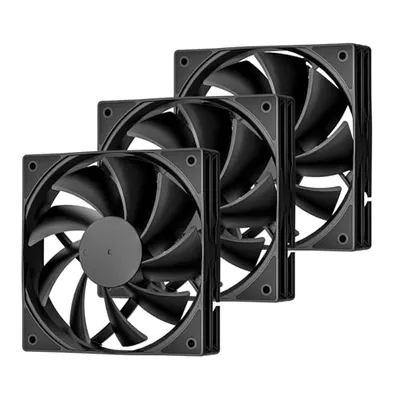
Blade count refers to the discrete number of airfoil-shaped elements that constitute a rotating or stationary aerodynamic surface, most commonly found in turbomachinery such as axial compressors, gas turbines, and fans, as well as in wind turbines and propellers. This parameter is a fundamental design characteristic directly influencing fluid dynamics, energy transfer efficiency, and mechanical performance. In axial flow machinery, the blade count per stage (for rotating blades) or per row (for stationary vanes) is critical for determining the velocity triangles, pressure ratios, and flow regimes. For instance, a higher blade count generally leads to reduced stage loading and improved flow guidance but can also increase aerodynamic losses due to increased wetted area and potential for blade interference.
The precise number of blades is a result of complex optimization processes involving trade-offs between aerodynamic efficiency, structural integrity, manufacturing feasibility, cost, and operational constraints like vibration frequencies and noise generation. For rotating components, the blade count, in conjunction with rotational speed and the number of stages, dictates the fundamental operating frequencies of the machine, which must be carefully managed to avoid resonance. Similarly, for stationary components like inlet guide vanes or stator vanes, the blade count affects the flow conditioning and velocity imparted to the subsequent rotating stage. The specification of blade count is therefore a critical engineering decision, requiring detailed analysis of flow patterns, stress concentrations, and dynamic behavior under operational loads.
Aerodynamic Principles and Blade Count
The relationship between blade count and aerodynamic performance is governed by principles of fluid mechanics and turbomachinery theory. For a given annulus area and flow rate, increasing the blade count (while maintaining a constant chord length and solidity) effectively reduces the passage width between adjacent blades. This reduction in passage width, in conjunction with the blade geometry (camber, stagger angle, airfoil profile), dictates the local flow velocity, pressure distribution, and the incidence angle at which the fluid enters the blade passage. A higher blade count can facilitate better flow turning and can lead to a more uniform velocity profile across the annulus, minimizing radial migration of the fluid and secondary flow losses. However, excessively high blade counts can lead to choked flow conditions or increased friction losses due to the larger surface area exposed to the fluid and tighter inter-blade passages, which can promote flow separation under adverse incidence conditions.
Axial Flow Compressors and Turbines
In axial flow compressors, blade count is a crucial design parameter for each stage. The rotor blades are responsible for adding kinetic and potential energy to the fluid, while the stator vanes are responsible for diffusing the flow and converting kinetic energy into pressure. A typical compressor stage might have a different number of rotor blades than stator vanes, often with a ratio designed to optimize flow angles and minimize potential aerodynamic issues like blade row interaction. For instance, a common configuration might have more rotor blades than stator vanes to allow for more efficient energy addition without significant flow blockage. Conversely, in gas turbine stages, the blade count is optimized for efficient extraction of energy from the hot, high-pressure gas flow. The number of blades affects the overall stage efficiency, pressure ratio (for compressors), work output (for turbines), and the volumetric flow coefficient. Advanced designs often employ sophisticated computational fluid dynamics (CFD) to determine the optimal blade count that balances these competing factors.
Wind Turbines and Propellers
For wind turbines, blade count is a primary factor in determining aerodynamic efficiency, torque, and structural loads. While early wind turbines often featured two or three blades to minimize cost and complexity, modern horizontal-axis wind turbines (HAWTs) overwhelmingly utilize three blades. This configuration is a compromise that offers a high energy capture efficiency (approaching the Betz limit) while maintaining acceptable levels of rotational speed, noise, and structural loads. Two-bladed designs are generally less efficient and can experience significant dynamic imbalance and fatigue issues. While theoretically, more blades could capture more energy, the diminishing returns and increased drag from closely spaced blades make this impractical. The blade count also influences the solidity of the rotor, affecting its ability to generate starting torque and its performance across varying wind speeds. Similarly, aircraft propellers are designed with specific blade counts (often two, three, or four) optimized for thrust generation, efficiency, and noise characteristics at different flight conditions.
Mechanical and Manufacturing Considerations
Beyond aerodynamics, blade count significantly impacts mechanical design and manufacturing. A higher number of blades means more individual components, which increases manufacturing complexity and cost. For rotating components, each blade is a critical structural element, and the total number influences the overall mass, inertia, and stress distribution. The vibrational modes of a bladed disk assembly are highly dependent on the blade count; certain counts can lead to dangerous resonances at operating speeds. Therefore, blade counts are often selected to 'avoid' specific excitation frequencies generated by upstream or downstream components. Manufacturing processes such as casting, forging, machining, or additive manufacturing are chosen based on material properties, blade complexity, and the required production volume, all of which are influenced by the blade count. For stationary blades, such as those in stators, the count impacts the structural mounting and sealing requirements.
Industry Standards and Variations
There are no universal, rigid industry standards dictating blade count for all turbomachinery applications, as the optimal number is highly application-specific and depends on performance targets, size, and operating environment. However, established engineering practices and empirical data guide the selection process. For instance, in jet engine compressors, there is a progression of blade counts per stage, generally increasing in the early stages to handle large volumes and decreasing in the later stages as the flow becomes denser and requires higher pressure rise per stage. In steam turbines, blade counts can vary significantly with pressure and flow conditions. For industrial fans, the range of blade counts can be even wider, from low-count, high-speed designs to high-count, low-speed, high-efficiency fans for specialized applications. The development and validation of blade counts are typically performed using a combination of theoretical calculations, wind tunnel testing, and computational simulations.
Performance Metrics Influenced by Blade Count
The blade count directly impacts several key performance metrics:
| Metric | Influence of Blade Count | Considerations |
| Aerodynamic Efficiency | Higher count can improve efficiency up to a point by enhancing flow guidance; excessive count can increase losses. | Balance between flow turning, passage losses, and choking limits. |
| Pressure Ratio/Work Output | Affects the incremental pressure rise per stage (compressors) or work extraction per stage (turbines). | Dependent on blade speed, density, and turning angle. |
| Flow Rate Capacity | Inter-blade passage area dictates volumetric flow. | Higher count with fixed chord reduces passage area. |
| Structural Loads and Vibration | Total number of blades affects rotational frequencies and modes. | Critical for avoiding mechanical resonance. |
| Manufacturing Cost | More blades generally increase tooling and production costs. | Consideration for mass production vs. specialized units. |
| Noise Generation | Blade count, tip speed, and blade passing frequency contribute to noise. | Higher blade passing frequencies can shift noise spectrum. |
Future Trends and Optimization
Future trends in turbomachinery and aerodynamic systems continue to push for higher efficiencies and reduced environmental impact, further refining the role of blade count. Advanced computational tools, including high-fidelity CFD and advanced optimization algorithms, enable designers to explore a wider design space for blade counts, often in conjunction with complex blade shapes and tip treatments. The integration of additive manufacturing also allows for more complex blade geometries and potentially new approaches to blading that were previously unfeasible, which could influence optimal blade counts. Research into active flow control and variable geometry blading also presents avenues where the fixed blade count paradigm might be augmented or modified to achieve broader operating efficiencies. Nevertheless, the fundamental trade-offs between aerodynamics, structural dynamics, and manufacturing remain central to the engineering process of determining blade count.