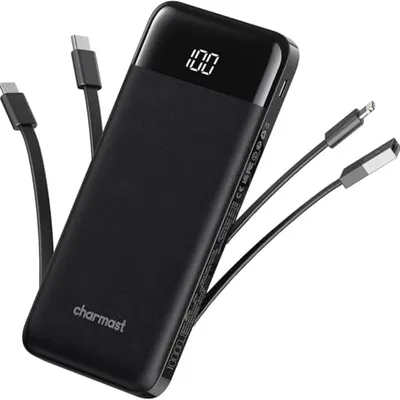
A Battery Charge Indicator (BCI) Type delineates the specific methodology and presentation interface employed by a device or system to communicate the current state of charge (SoC) of its associated energy storage system, predominantly batteries. This classification encompasses a wide spectrum of approaches, from rudimentary visual cues like simple LEDs or analog gauges to sophisticated digital displays providing quantitative SoC percentages, estimated remaining runtime, and even nuanced diagnostic information such as battery health and temperature. The type of indicator chosen is intrinsically linked to the application's complexity, the target user's technical acumen, cost constraints, and the overall design philosophy of the product, influencing user experience, operational efficiency, and the perceived value of the device.
The selection and implementation of a BCI type involve engineering considerations regarding accuracy, update frequency, power consumption of the indicator itself, and its integration with the battery management system (BMS). Different types leverage varying levels of information derived from the BMS, which monitors parameters such as voltage, current, temperature, and internal resistance. Advanced BCIs may employ Kalman filters or equivalent state estimation algorithms to predict SoC with higher fidelity, accounting for factors like Peukert's law for lead-acid batteries or capacity fade in lithium-ion chemistries. The physical manifestation of these indicators can range from passive elements that require user interpretation to active, data-driven interfaces that actively inform the user of the battery's operational status.
Mechanism of Action and Underlying Principles
The fundamental principle behind any battery charge indicator is the estimation of the State of Charge (SoC), typically expressed as a percentage of the battery's total capacity. This estimation is performed by the Battery Management System (BMS) or a dedicated charge monitoring circuit. The primary methods employed include:
- Coulomb Counting (Current Integration): This method measures the current flowing into or out of the battery over time and integrates it to determine the net charge transferred. While conceptually simple, it is susceptible to cumulative errors due to inaccuracies in current sensor calibration, self-discharge, and variations in battery capacity. A reference SoC is typically established at full charge or discharge.
- Voltage Measurement: The open-circuit voltage (OCV) of a battery is often correlated with its SoC. However, this correlation is highly dependent on battery chemistry, temperature, and the battery's load conditions. Under load, the terminal voltage drops (IR drop), necessitating voltage compensation or removal of the load to measure OCV accurately. This method is often used in conjunction with others for calibration or initial estimation.
- State Estimation Algorithms: More advanced systems utilize algorithms such as the Kalman Filter (and its variants like Extended Kalman Filter - EKF, Unscented Kalman Filter - UKF) or the Particle Filter. These algorithms combine Coulomb counting and voltage measurements with a mathematical model of the battery's behavior (e.g., impedance spectroscopy, capacity fade models) to provide a more robust and accurate SoC estimation, adapting to changing conditions and battery aging.
- Internal Resistance Measurement: Battery internal resistance typically increases as the battery degrades or its SoC decreases. Measuring this resistance can provide an indirect indication of SoC and battery health.
Types of Battery Charge Indicators
Battery Charge Indicators are broadly categorized by their display method and the information conveyed. Each type presents distinct advantages and disadvantages in terms of cost, complexity, readability, and accuracy.
1. Simple LED Indicators
Mechanism
These are the most basic indicators, typically comprising one or more Light Emitting Diodes (LEDs). A single LED might illuminate when a certain SoC threshold is met (e.g., 'charging' or 'low battery'). Multiple LEDs can represent discrete SoC levels (e.g., three LEDs indicating 100%, 50%, and 25% SoC, or color-coded for 'full', 'medium', 'low'). The BMS provides a simple binary or multi-level output signal to drive these LEDs based on predefined SoC thresholds.
Application Context
Common in low-cost portable electronics, power tools, simple battery-powered devices, and electric vehicles (EVs) for basic status indications.
Pros
- Extremely low cost.
- Minimal power consumption.
- Simple to implement.
- High visibility in various lighting conditions.
Cons
- Very low resolution; provides only approximate SoC.
- Limited diagnostic information.
- Thresholds are often arbitrary and not precisely calibrated to the specific battery's performance.
2. Analog Gauges (Voltmeters/Ammeters)
Mechanism
These indicators utilize a physical needle that moves across a calibrated scale, driven by an analog meter movement (e.g., moving coil). A voltmeter directly displays the battery's terminal voltage, which is then interpreted by the user as an approximate SoC based on the scale markings. An ammeter, often used in conjunction with a voltmeter or as part of a larger system, shows the current flow, aiding in understanding charging or discharging rates.
Application Context
Historically common in automobiles, older electronic devices, and some industrial equipment. Less prevalent in modern consumer electronics due to the advent of digital displays.
Pros
- Intuitive visual representation of a range.
- Can provide a continuous, albeit approximate, reading.
- No complex digital interface required for the display itself.
Cons
- Accuracy is highly dependent on load conditions and temperature, making direct SoC correlation difficult.
- Mechanical components can be prone to failure or wear.
- Limited precision and resolution.
- Retrofit integration into modern digital systems is complex.
3. Digital Segment Displays (e.g., 7-Segment Displays)
Mechanism
These displays use a set of illuminated segments (typically seven) to form alphanumeric characters. A microcontroller within the device interprets the SoC data from the BMS and translates it into numerical digits (e.g., '88', '8', or '88%'). They offer a clear, quantitative display of SoC in percentage form.
Application Context
Found in a variety of consumer electronics, chargers, medical devices, and some industrial controls where a precise numerical SoC reading is desired but without the full graphical capabilities of LCD or OLED.
Pros
- Clear, quantitative SoC display (e.g., 75%).
- Relatively low cost compared to graphical displays.
- Low power consumption.
Cons
- Limited to numerical and basic character display.
- No graphical representation of trends or battery health.
- Requires a microcontroller for interpretation and driving the display.
4. Dot-Matrix or Monochromatic Graphical Displays
Mechanism
These displays are composed of a grid of pixels, allowing for more complex graphical representations than segment displays. They can show a bar graph to represent SoC, display battery icons, and present simple text messages or diagnostics. The BMS data is processed by a microcontroller to render these graphics.
Application Context
Common in mid-range consumer electronics, electric scooters, some electric bicycles, and older generations of smartphones or laptops.
Pros
- More informative than simple LEDs or segment displays.
- Can display battery icons, charging status, and basic text.
- Provides a visual trend of charge depletion/replenishment.
Cons
- Higher cost than simpler displays.
- Can be less readable in direct sunlight than simpler displays.
- Limited color depth or complexity.
5. Full-Color LCD/OLED Displays
Mechanism
Utilizing advanced display technologies like Liquid Crystal Displays (LCD) or Organic Light-Emitting Diodes (OLED), these indicators offer the highest resolution and graphical capability. They can present detailed information including percentage SoC, estimated time remaining (ETR), graphical charge bars, battery health status, temperature, charging current, and even diagnostic alerts. These are driven by sophisticated BMS and microcontrollers, often capable of rich user interfaces.
Application Context
Prevalent in modern high-end smartphones, laptops, tablets, advanced EVs, electric motorcycles, and high-performance portable equipment.
Pros
- Highly detailed and intuitive information display.
- Excellent visual clarity and aesthetic appeal.
- Can integrate complex diagnostic data and user interfaces.
- High resolution allows for precise representation of SoC trends.
Cons
- Highest cost among BCI types.
- Higher power consumption, though modern OLEDs are efficient.
- Requires significant processing power and complex software integration.
- Potential for screen burn-in with OLEDs if static information is displayed for extended periods.
Industry Standards and Compliance
While there isn't a single universal standard dictating the *type* of battery charge indicator, several standards influence their implementation and data reporting, particularly in the automotive and consumer electronics sectors. These include:
- ISO 26262 (Road vehicles – Functional safety): For automotive applications, especially EVs, this standard mandates safety considerations for the BMS and its associated displays, ensuring that critical information like SoC and potential failures are communicated reliably and safely.
- SAE J1797 (Recommended Practice for Electric Vehicle DC Power Connection): While not directly about indicators, standards like this influence the underlying data parameters (e.g., voltage, current) that BCIs rely upon.
- IEC 62133 (Secondary cells and batteries containing alkaline or other non-acid electrolytes – Safety requirements for portable sealed secondary cells, and for batteries made from them, for use in portable applications): This standard focuses on the safety aspects of the battery system itself but implicitly influences how SoC information, which is crucial for safe operation, must be managed and potentially displayed.
- Battery Data Communication Protocols (e.g., SMBus, I2C, CAN Bus): These protocols are fundamental to how the BMS communicates SoC and other diagnostic data to the display driver or microcontroller. The choice of protocol impacts the speed, reliability, and complexity of the BCI system. For instance, in EVs, CAN Bus is standard for transmitting BMS data, including SoC, to the vehicle's dashboard display.
Evolution and Technological Advancements
The evolution of battery charge indicators mirrors advancements in battery technology and display interfaces. Early systems relied on simple voltage readings and manual interpretation. The advent of Coulomb counting offered improved accuracy, but its limitations led to the development of sophisticated state estimation algorithms like Kalman filtering. Display technology has progressed from basic LEDs and analog gauges to sophisticated graphical LCD and OLED screens. Current research focuses on:
- Real-time Impedance Spectroscopy: For more accurate SoC and State of Health (SoH) estimation that adapts dynamically to battery aging and usage patterns.
- Machine Learning for SoC Prediction: Utilizing AI to learn complex battery behaviors and environmental factors for highly accurate predictions.
- Energy Harvesting Integration: Designing indicators that consume minimal power, potentially even self-powering through ambient energy harvesting, especially for IoT devices.
- Standardized Communication Interfaces: Pushing for more unified and robust communication protocols between BMS and display units across different manufacturers and device types.
- Predictive Maintenance Alerts: Moving beyond simple SoC to proactively warn users about impending battery failures or performance degradation.
Practical Implementation and Design Considerations
Implementing a BCI system involves several critical design decisions:
- Battery Chemistry: Different chemistries (Li-ion variants, NiMH, Lead-acid) have distinct voltage vs. SoC curves and self-discharge rates, requiring tailored algorithms.
- Power Budget: The indicator itself consumes power. For battery-powered devices, this is a critical factor, often favoring low-power displays or indicators that can be activated on demand.
- Environmental Factors: Temperature and humidity can affect both battery performance and display visibility. The chosen BCI type must be readable and functional across the expected operating range.
- User Interface (UI) / User Experience (UX): The information presented must be easily understandable by the target user. An expert user might prefer raw data, while a general consumer needs simple, clear indicators like percentage or a color-coded bar.
- Cost vs. Performance: Higher accuracy and more sophisticated displays come at a higher Bill of Materials (BOM) cost. The trade-off must align with the product's market positioning.
- Integration with BMS: The BCI system must reliably interface with the BMS, whether it's a custom-designed circuit or an off-the-shelf module. This includes selecting appropriate communication protocols and ensuring data integrity.
| Indicator Type | Primary Principle | Accuracy (Relative) | Information Granularity | Power Consumption (Relative) | Cost (Relative) | Typical Application |
|---|---|---|---|---|---|---|
| Simple LED | Threshold Detection | Low | Approximate SoC (e.g., levels) | Very Low | Very Low | Basic portable devices, power tools |
| Analog Gauge | Voltage/Current Measurement | Low-Medium | Approximate SoC (continuous scale) | Low | Low | Automotive (older), industrial |
| 7-Segment Display | Coulomb Counting/Voltage | Medium | Quantitative SoC (%) | Low-Medium | Medium | Chargers, medical devices |
| Dot-Matrix/Mono-Graphic | Coulomb Counting/State Estimation | Medium-High | SoC Bar, Icons, Text | Medium | Medium-High | Mid-range electronics, e-scooters |
| Color LCD/OLED | Advanced State Estimation | High | Detailed SoC, ETR, Health | Medium-High | High | High-end consumer electronics, EVs |
Future Outlook
The future of battery charge indicators is increasingly intertwined with the broader development of battery management systems and advanced user interfaces. Expect greater integration of predictive analytics, leveraging AI and machine learning to offer not just current SoC but also precise future performance forecasts and proactive maintenance alerts. The miniaturization and increased efficiency of display technologies will enable more sophisticated, yet power-conscious, indicators even in the smallest devices. Furthermore, a drive towards interoperability and standardized communication will likely simplify the integration of diverse battery systems with intuitive and informative charge indication across various platforms, enhancing user trust and operational efficiency.